








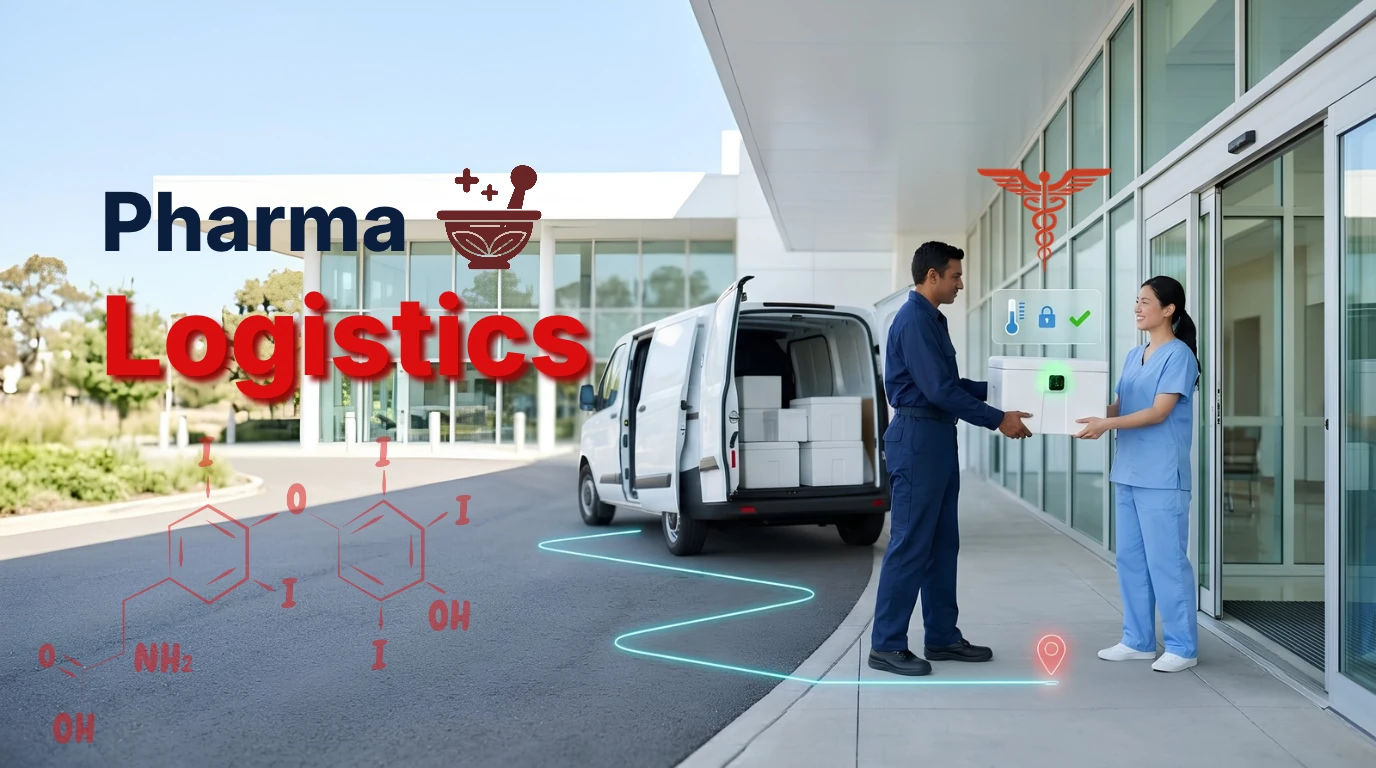
Connected logistics helps the pharmaceutical and healthcare industry by tracking the location, temperature, and condition of medicines and medical supplies in real time, from the factory to the hospital and pharmacy. IoT sensors and GPS trackers alert teams the moment a vaccine shipment warms up, a vehicle goes off route, or stock runs low, and every movement leaves a record that supports quality and regulatory checks. The result is fewer spoiled medicines, less theft and counterfeiting, and the right supplies reaching patients on time.
Medicines and medical supplies are some of the most demanding goods to move. Many are temperature-sensitive, high-value, and urgently needed, and a single mistake can harm patients. This guide explains why the pharmaceutical supply chain needs connected logistics, how it works at each stage, how hospitals use it for pharmacy, blood, and surgical supplies, and what to look for in a solution.
What this guide covers
- Why pharmaceutical logistics is so demanding
- What connected logistics does
- Connected logistics across the pharmaceutical supply chain
- Connected logistics in hospitals and surgical care
- Benefits for pharma and healthcare organisations
- How to get started
- FAQs
Why Pharmaceutical Logistics Is So Demanding
- Temperature-sensitive products: many vaccines, insulins, and biologic medicines must be kept at 2–8 °C, and some much colder. A temperature excursion can make them less effective without any visible sign.
- Falsified and substandard medicines: the World Health Organization estimated in 2017 that 1 in 10 medical products in low- and middle-income countries is substandard or falsified. Gaps in tracking make it easier for fakes to enter the supply chain.
- Theft in transit: medicines are valuable and easy to resell, so loads are targets on the road and in storage.
- Stock-outs and expiry: hospitals and pharmacies must balance having enough stock with not letting medicines expire on the shelf.
- Time-critical deliveries: late medicines, blood, or surgical supplies can delay treatment and cancel operations.
- Regulation: Good Distribution Practice (GDP) guidelines from the WHO and national regulators expect companies to control and record storage and transport conditions.
What Connected Logistics Does
Connected logistics links manufacturers, warehouses, vehicles, and healthcare facilities through IoT sensors, GPS trackers, and a cloud platform. Unlike barcodes, which only record where an item was when it was scanned, connected sensors report continuously, so teams see the current location and condition of goods and get alerts as problems happen. Combined with analytics, this data also shows patterns, such as routes where temperatures often rise or medicines that regularly run short.
Connected Logistics Across the Pharmaceutical Supply Chain
Manufacturing
Sensors in production areas monitor temperature, humidity, and equipment performance, so issues are caught before they affect a batch. Data on machine performance supports preventive maintenance and avoids unplanned stoppages.
Warehousing
Temperature and humidity sensors protect stock in cold rooms and warehouses, with alerts if conditions drift or doors are left open. Visibility of stock across multiple sites helps avoid both shortages and excess inventory that ends up expiring.
Transport
GPS trackers show where every vehicle and shipment is, while temperature sensors in the load report in real time. If the temperature moves outside the agreed range, the team is alerted immediately and can act before the medicines are compromised. Geofences and route alerts flag unplanned stops or deviations that could signal theft.
Last Mile Delivery
For deliveries to hospitals, clinics, and pharmacies, live tracking and accurate arrival times help staff plan, while temperature records and digital proof of delivery confirm that medicines arrived in the right condition. Route data helps avoid delays caused by traffic or weather.
Security and Anti-Counterfeiting
Continuous tracking of shipments, combined with serialised barcodes, RFID tags, or smart labels on packs, creates a record of every movement. This makes it harder for stolen or falsified products to enter the supply chain and helps confirm that patients receive genuine medicines.
Connected Logistics in Hospitals and Surgical Care
Hospitals run complex supply chains of their own, where delays and errors directly affect patient care:
- Hospital pharmacy: tracking how medicines are used shows real demand, so stock is reordered automatically before it runs out, and expiring stock is used or moved first.
- Vaccines and refrigerated medicines: sensors in pharmacy fridges and freezers alert staff to temperature changes, including overnight and at weekends.
- Blood and plasma: blood banks need fast, temperature-controlled transport between collection points, regional banks, and hospitals, with a clear record of every movement.
- Surgical kits and implants: instrument sets, implants, and consumables must arrive sterile, complete, and on time for scheduled operations. Tracking them avoids cancelled procedures.
- Lab samples: specimens sent from clinics to laboratories can be tracked for time and temperature, so results are reliable.
- Medical equipment: tracking the location and usage of equipment such as infusion pumps and wheelchairs reduces time spent searching and supports maintenance.
Accurate, automatic records also support patient safety: they reduce manual errors, help remove expired products from use, and give staff confidence that the right supplies are available when they need them.
Benefits for Pharma and Healthcare Organisations
- Protected product quality: temperature problems are caught in time to save medicines and vaccines.
- Regulatory compliance: automatic, time-stamped records support GDP requirements and audits.
- Less theft and counterfeiting: continuous tracking and route alerts make diversion harder and easier to spot.
- Fewer stock-outs and less waste: accurate stock data keeps medicines available while reducing expiry.
- On-time deliveries: live visibility helps meet urgent hospital and pharmacy deadlines.
- Better patient care: the right medicines and supplies are in the right place when patients need them.
How to Get Started
- Map your cold chain and high-value flows, from manufacturing to the final delivery point.
- Set temperature ranges and alert rules for each product type, and decide who responds to each alert.
- Fit sensors and trackers to cold rooms, fridges, vehicles, and high-value shipments.
- Connect the data to your quality, warehouse, and pharmacy systems.
- Start with a pilot, such as one route or one hospital, then expand once the process works.
How Anstel Helps
Anstel's connected logistics solutions, now part of the Autonautics platform, bring storage and transport monitoring into one dashboard. Wireless temperature sensors watch cold rooms, fridges, and freezers around the clock, and Anstel Connected Fleet combines live GPS tracking with in-vehicle temperature and door sensors, geofence and route alerts, driver behaviour monitoring, and a complete history of every trip.
Frequently Asked Questions
What is connected logistics in the pharmaceutical industry?
Connected logistics uses IoT sensors, GPS trackers, and a cloud platform to monitor the location, temperature, and condition of medicines from manufacturing to delivery. It alerts teams to problems in real time and keeps records that support quality and regulatory requirements.
Why is cold chain monitoring important for medicines?
Many vaccines and biologic medicines must stay within narrow temperature ranges, often 2–8 °C. If they get too warm or too cold, they can lose effectiveness without any visible change. Cold chain monitoring detects these excursions so the problem can be fixed or the product quarantined.
How does IoT help prevent counterfeit medicines?
IoT tracking creates a continuous record of where a shipment has been and how it was handled. Combined with serialised packaging, it makes it harder for falsified or stolen products to enter the supply chain unnoticed.
How does connected logistics help hospitals?
It helps hospitals keep pharmacy stock at the right level, protect refrigerated medicines and vaccines, move blood and lab samples quickly and safely, make sure surgical kits and implants arrive on time, and locate medical equipment.
What is Good Distribution Practice (GDP)?
Good Distribution Practice is a set of guidelines, published by the WHO and many national regulators, for storing and transporting medicines so their quality is maintained. It includes controlling and recording temperatures during storage and transport.
Can connected logistics prevent theft of medicines in transit?
It can reduce theft and help respond faster. Live tracking, geofences, and alerts for unplanned stops or route changes show when a shipment is at risk, and the trip history helps investigators find out where a loss occurred.
From Factory to Patient, Fully Visible
In healthcare, logistics is part of patient care. Connected logistics gives pharmaceutical companies, distributors, and hospitals a clear, real-time view of their medicines and supplies, so they reach patients safe, genuine, and on time.
Get in touch with the Anstel team to plan cold chain and shipment monitoring for your medicines and medical supplies.