






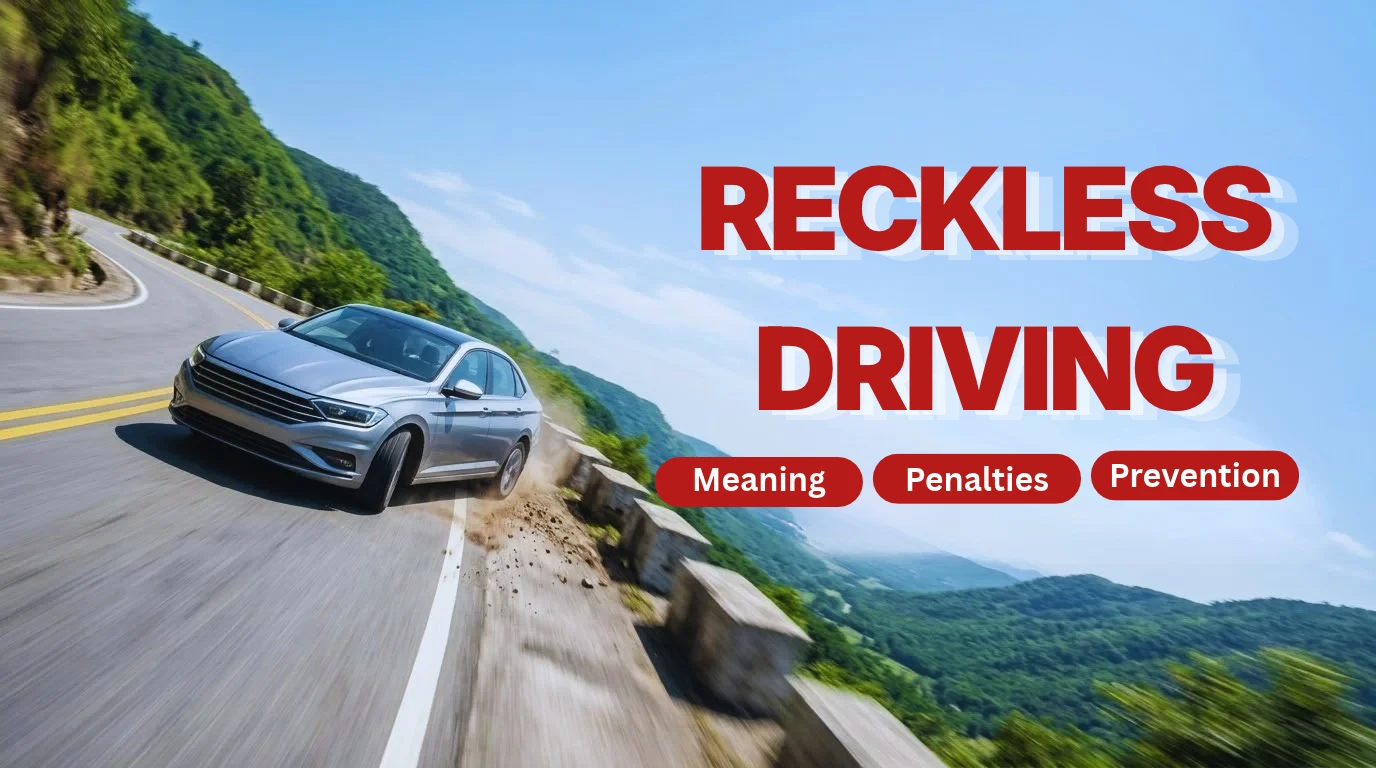
Reckless driving, called rash driving in India, means driving with deliberate disregard for the safety of other people or property: for example, heavy speeding, jumping red lights, overtaking dangerously, or using a phone at the wheel. Indian law treats it as rash or dangerous driving, and it can lead to fines, licence suspension, and jail.
Over-speeding, the most common form of reckless driving, is also the biggest cause of road deaths in the country. According to the Ministry of Road Transport and Highways' Road Accidents in India 2024 report, India recorded 4,87,707 road accidents and 1,77,175 deaths in 2024, and over-speeding alone accounted for 70% of those deaths.
This guide explains what counts as reckless driving, how it differs from careless and aggressive driving, the penalties under Indian law, what it costs a fleet, and how to prevent it with telematics and coaching.
What this guide covers
- What is reckless driving?
- Examples of reckless driving
- Reckless driving in India: the numbers
- Penalties for reckless driving in India
- What reckless driving costs a fleet
- Why fleet drivers drive recklessly
- How fleet tracking detects reckless driving
- How to prevent reckless driving in your fleet
- FAQs
What Is Reckless Driving?
Reckless driving is a choice, not an accident. The driver knows, or should know, that the way they are driving puts people at risk, and drives that way anyway. Speeding through a crowded market, overtaking on a blind curve, or racing another vehicle are all reckless because the danger is obvious.
Indian law uses different words for the same idea. The Bharatiya Nyaya Sanhita (BNS), which replaced the Indian Penal Code in 2024, punishes rash or negligent driving on a public way, and the Motor Vehicles Act punishes dangerous driving.
Reckless vs. careless vs. aggressive vs. distracted driving
- Reckless (rash) driving: knowingly taking serious risks with other people's safety. Example: overtaking a truck on a blind curve.
- Careless (negligent) driving: failing to take the care a reasonable driver would take, without intending harm. Example: not checking mirrors before changing lanes.
- Aggressive driving: driving in a hostile way towards other road users, which can turn into road rage. Example: tailgating and flashing lights to force a car out of the way.
- Distracted driving: taking attention off the road. Example: reading a message on a phone while driving.
The lines between them blur. Distracted or aggressive driving becomes reckless when the risk is serious and obvious, and courts look at the facts of each case.
Examples of Reckless Driving
- Driving well above the speed limit, especially near schools, markets, and crossings
- Jumping red lights or ignoring stop signs and traffic police signals
- Driving on the wrong side of the road or a divided highway
- Overtaking on curves, bridges, or hills, or overtaking from the left
- Tailgating, or following so closely that you cannot stop in time
- Weaving between lanes and cutting in front of other vehicles
- Racing, stunts, or showing off on public roads
- Driving after drinking alcohol or taking drugs
- Using a handheld phone to call, text, or watch videos while driving
- Failing to give way to pedestrians at crossings
- Driving when exhausted after a long shift, with a high risk of falling asleep
Reckless Driving in India: The Numbers
MoRTH's latest report breaks down road deaths by the traffic rule that was broken. Over-speeding is far ahead of every other cause:
- Over-speeding: 1,24,522 deaths, 70.3% of all road deaths
- Driving on the wrong side or lane indiscipline: 8,327 deaths, 4.7%
- Drunk driving or consumption of alcohol or drugs: 3,204 deaths, 1.8%
- Use of mobile phone: 2,002 deaths, 1.1%
- Jumping red light: 528 deaths, 0.3%
The remaining 22% of deaths are recorded under other causes. Over-speeding deaths rose by almost 6% from 2023 to 2024, even as deaths from drunk driving, wrong-side driving, and phone use fell.
Penalties for Reckless Driving in India
A reckless driver can be charged under the Motor Vehicles Act, the Bharatiya Nyaya Sanhita, or both, depending on what happened:
- Motor Vehicles Act, Section 184 (dangerous driving): includes jumping red lights, using a handheld phone, and dangerous overtaking. First offence: 6 months to 1 year in prison, a fine of ₹1,000 to ₹5,000, or both. Repeat within 3 years: up to 2 years in prison, a fine of up to ₹10,000, or both.
- Motor Vehicles Act, Section 183 (over-speeding): fines starting at ₹1,000 for light motor vehicles and ₹2,000 for medium and heavy vehicles.
- Motor Vehicles Act, Section 185 (drunk driving): first offence: a fine of ₹10,000, up to 6 months in prison, or both, with higher penalties for repeat offences.
- Bharatiya Nyaya Sanhita, Section 281 (rash or negligent driving on a public way): up to 6 months in prison, a fine of up to ₹1,000, or both.
- Bharatiya Nyaya Sanhita, Section 106(1) (causing death by a rash or negligent act): up to 5 years in prison and a fine.
The licensing authority can also suspend or cancel the driver's licence. The BNS also contains a stricter provision, Section 106(2), for drivers who leave the scene of a fatal crash without reporting it, but its implementation has been on hold pending review. Fines collected on the spot can differ from state to state.
This section is general information, not legal advice. For a specific case, speak to a lawyer.
What Reckless Driving Costs a Fleet
For a business, one reckless driver can cost far more than a traffic fine:
- Crashes and injuries: harm to the driver, other road users, and pedestrians, with legal cases that can run for years.
- Third-party claims: accident victims can claim compensation from the vehicle owner and insurer through the Motor Accident Claims Tribunal.
- Repairs and downtime: a damaged vehicle earns nothing while it is in the workshop, and the load it was carrying may be delayed or lost.
- Higher insurance costs: claims push up premiums at renewal. Insurers increasingly price policies using driving data.
- Faster wear: harsh braking, rapid acceleration, and speeding wear out brakes, tyres, and engines sooner, raising fleet maintenance costs and fuel bills.
- Lost licences: a suspended licence takes a driver, and possibly a vehicle, off the road.
- Lost contracts: many customers, including oil companies, schools, and large shippers, check a transporter's safety record before awarding work.
Why Fleet Drivers Drive Recklessly
Reckless driving in a fleet is rarely just about one bad driver. It is often a response to how the work is organised:
- Tight deadlines: unrealistic delivery windows push drivers to speed and skip breaks.
- Per-trip incentives: paying more for more trips rewards speed over safety.
- Long hours and fatigue: tired drivers react slowly and take more risks.
- No feedback: without data, drivers do not know how they compare, and managers only hear about problems after a crash.
- Phone calls from dispatch: drivers often take calls from their own office while driving.
- Gaps in training: new drivers may never have been taught defensive driving or the company's rules.
How Fleet Tracking Detects Reckless Driving
A telematics device, of the kind used in a vehicle tracking system, records how each vehicle is driven, not just where it goes. Combined with in-cab cameras, it can detect most reckless behaviours automatically:
- Over-speeding: GPS speed is compared with the limit you set for the vehicle type or zone.
- Harsh braking and rapid acceleration: the device's accelerometer measures sudden changes in speed.
- Sharp cornering: sideways forces are recorded by the accelerometer.
- After-hours or unauthorised use: ignition and location data are checked against working hours and geofences.
- Route deviation and unplanned stops: the actual route is compared with the planned route.
- Drowsiness, phone use, smoking, and no seat belt: an AI-based in-cab camera, known as a driver monitoring system.
- Tailgating and lane drifting: a forward-facing ADAS camera, where one is fitted.
Each event is time-stamped and placed on the map, so a manager can see exactly where and when it happened and talk to the driver with facts rather than complaints.
How to Prevent Reckless Driving in Your Fleet
Technology finds the problem; a clear process fixes it. Most successful fleet safety programs follow the same loop:
- Write a clear driving policy. Set out speed limits by vehicle type and road, rules on phone use, alcohol, seat belts, and rest breaks, and what happens when rules are broken. Ask every driver to sign it.
- Detect risky driving automatically. Fit telematics to every vehicle and set alerts for over-speeding, harsh braking, rapid acceleration, and sharp cornering.
- Alert in real time. Send alerts to the driver, through an in-cab buzzer or app, and to the manager, so behaviour can be corrected immediately rather than at the end of the month.
- Score drivers every week. Turn events into a simple safety score per driver and share the rankings.
- Coach with specific events. Review the exact time, place, and video of each serious event with the driver, and agree on what to change. Target extra training at the drivers who need it most.
- Fix schedules and incentives. Plan routes with realistic times and rest breaks, stop calling drivers while they are on the move, and avoid pay that rewards speed.
- Reward safe drivers. Recognise the safest drivers each month with bonuses, certificates, or better routes. Positive feedback changes habits faster than penalties alone.
- Act on repeat offenders. Apply the policy consistently, from warnings and retraining to removal from driving duties.
How Anstel Helps You Stop Reckless Driving
Anstel Connected Fleet monitors over-speeding, sudden braking and acceleration, idling, and journey history for every vehicle, with real-time alerts and driving behaviour reports. Add Anstel's AI-powered driver monitoring system to detect drowsiness, distraction, phone use, smoking, and missing seat belts inside the cab. Together they give you the evidence to coach drivers and the data to show that your fleet is getting safer.
Frequently Asked Questions
What is considered reckless driving?
Reckless driving is driving with deliberate disregard for the safety of other people or property. Common examples include heavy speeding, jumping red lights, driving on the wrong side, overtaking on blind curves, weaving between lanes, racing, drunk driving, and using a phone while driving.
What is the punishment for reckless driving in India?
Under Section 184 of the Motor Vehicles Act, a first offence of dangerous driving can lead to six months to one year in prison, a fine of ₹1,000 to ₹5,000, or both. A repeat offence within three years can lead to up to two years in prison, a fine of up to ₹10,000, or both. Rash driving can also be charged under Section 281 of the Bharatiya Nyaya Sanhita, and causing death by negligence under Section 106.
What is the difference between rash and negligent driving?
Rash driving means knowingly taking a risk, such as overtaking on a blind curve while aware of the danger. Negligent driving means failing to take the care a reasonable driver would take, such as not noticing a pedestrian because of inattention. Indian law treats both as offences when they endanger human life.
Is reckless driving a criminal offence in India?
Yes. Rash or negligent driving on a public way is a criminal offence under Section 281 of the Bharatiya Nyaya Sanhita, and dangerous driving under Section 184 of the Motor Vehicles Act can also lead to imprisonment, in addition to fines and licence suspension.
How can I report rash driving in India?
In an emergency, call 112. Otherwise, report the vehicle to the local traffic police with its registration number, the location, and the time. Many city traffic police accept complaints with photos or videos through their helplines, apps, or social media accounts.
How can fleet managers prevent reckless driving?
Fleet managers can prevent reckless driving by setting a clear driving policy, using telematics to detect speeding and harsh driving, sending real-time alerts, scoring drivers every week, coaching them on specific events, planning realistic schedules with rest breaks, and rewarding the safest drivers.
Make Safe Driving the Norm
Over-speeding and other reckless driving kill more people on India's roads than any other cause, and for fleets it brings legal risk, higher costs, and lost business. The good news is that most of it can be measured, and what can be measured can be coached.
Get in touch with the Anstel team to see how driving behaviour monitoring would work for your vehicles.