











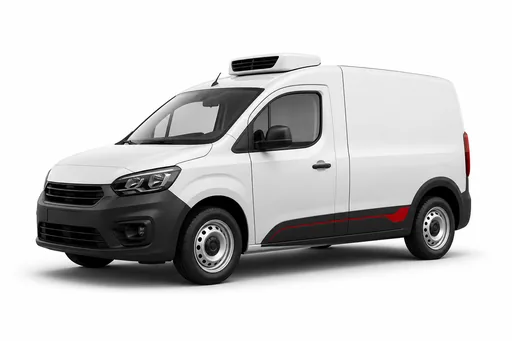
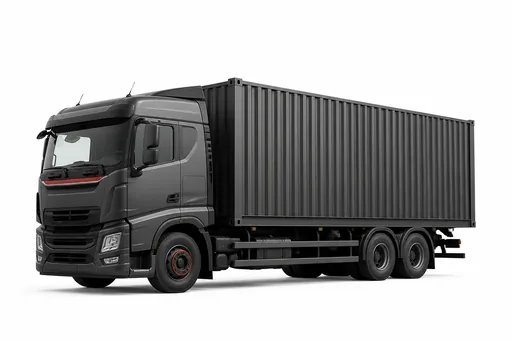
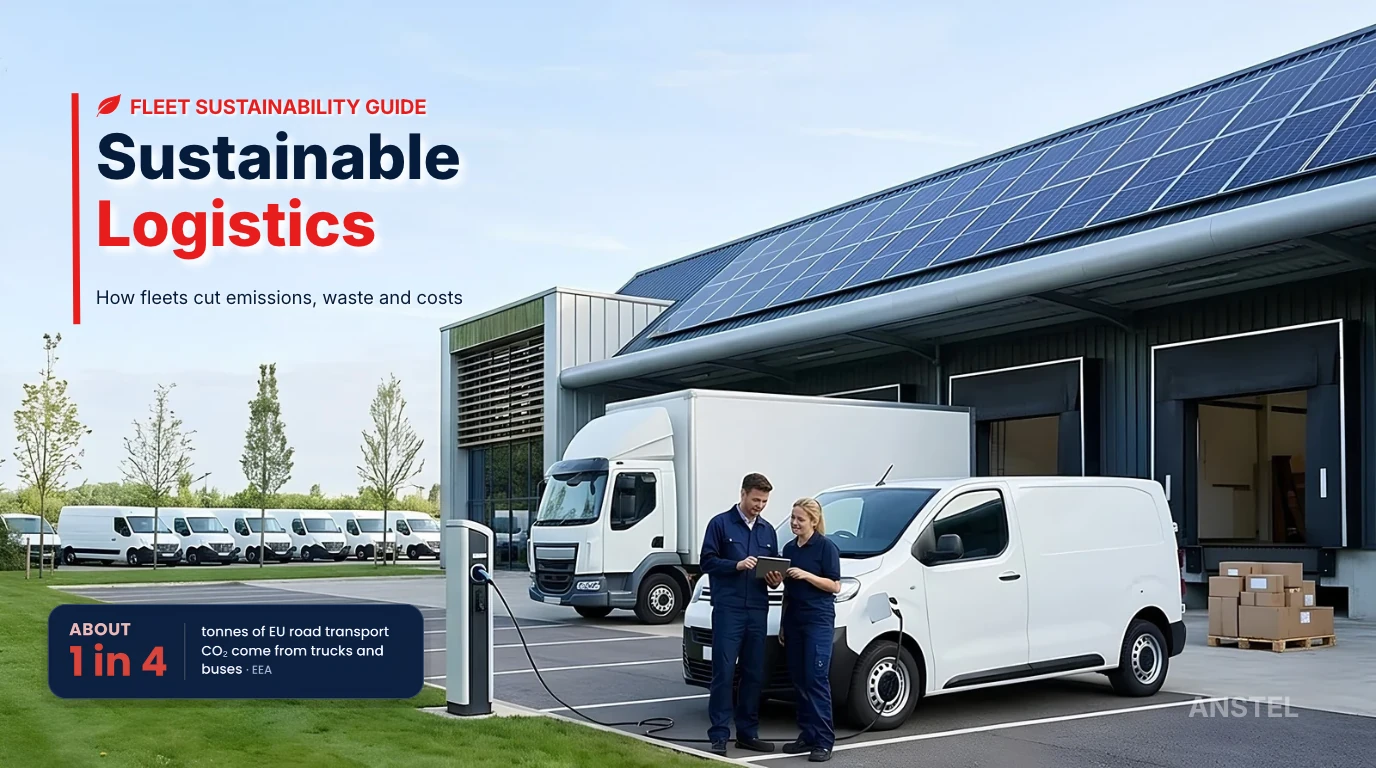
Sustainable logistics means moving goods in a way that reduces harm to the environment, protects people, and stays profitable. For fleets, the biggest levers are using less fuel, cutting empty and unnecessary kilometres, keeping vehicles efficient, reducing failed deliveries, moving to cleaner vehicles, and keeping drivers and communities safe. Connected fleet technology measures each of these, so sustainability becomes something a business can track and improve rather than a slogan.
Road freight is a major source of emissions. In the European Union, for example, trucks and buses produce roughly a quarter of road transport carbon dioxide emissions, according to the European Environment Agency. Customers, investors, and regulators increasingly expect businesses to measure and reduce these emissions. The good news is that most of the steps that make logistics greener also make it cheaper. This guide explains the three pillars of sustainable logistics, eight practical ways fleets can become more sustainable, how technology helps, and the KPIs to track.
What this guide covers
- What sustainable logistics is
- The three pillars of sustainability
- Why it matters for fleets
- 8 ways to make your fleet more sustainable
- How technology supports sustainable logistics
- Sustainability KPIs to track
- FAQs
What Is Sustainable Logistics?
Sustainable logistics, sometimes called green logistics, applies sustainability to the way goods are stored, moved, and delivered. It is part of sustainable supply chain management, which looks at the whole chain from sourcing to delivery. For businesses that run vehicles, transport is usually where the biggest and fastest gains are.
The Three Pillars of Sustainability
- Environmental: lower fuel use and emissions, less waste, and fewer unnecessary trips.
- Social: safe drivers, fair working hours, safer roads for pedestrians and other road users, and secure cargo.
- Economic: lower running costs, better use of vehicles, reliable deliveries, and long-term profitability.
The three pillars support each other. A driver who drives smoothly uses less fuel, is less likely to crash, and keeps the vehicle on the road for longer.
Why Sustainable Logistics Matters for Fleets
- Lower costs: less fuel, fewer repairs, and better-used vehicles.
- Customer expectations: large customers increasingly ask suppliers to report and reduce transport emissions.
- Regulation and reporting: emissions rules and sustainability reporting requirements are tightening in many markets.
- Reputation: safe, responsible fleets build trust with customers, communities, and employees.
8 Ways to Make Your Fleet More Sustainable
1. Measure Your Fuel Use and Emissions
You can't reduce what you don't measure. Fuel consumption is the starting point, because carbon dioxide emissions are directly linked to the fuel burned. Track fuel per kilometre and per delivery for each vehicle to set a baseline.
2. Encourage Eco-Driving
Smooth acceleration, gentle braking, and sensible speeds save fuel and reduce emissions. Driver scores and coaching make eco-driving part of everyday work. Our "How to Reduce Fleet Fuel Consumption" guide in the Anstel Knowledge Center covers this in detail.
3. Cut Unnecessary Idling
Engines running while vehicles stand still burn fuel and pollute for no benefit. Idle alerts and reports show where to act.
4. Optimise Routes and Loads
Efficient routes, fewer empty kilometres, and consolidated loads mean fewer trips for the same work.
5. Keep Vehicles Efficient
Correct tyre pressure, regular servicing, and early fixes for engine faults keep vehicles running efficiently and lasting longer.
6. Reduce Failed Deliveries and Returns
Every failed delivery means another trip. Confirming addresses and delivery slots, sharing live arrival times, and capturing digital proof of delivery cut repeat journeys.
7. Move to Cleaner Vehicles
Electric vehicles are becoming practical for many urban and regional routes. Telematics data on daily distances, stops, and loads shows which vehicles and routes are best suited to switch first.
8. Go Paperless and Protect People
Digital job sheets, inspections, and proof of delivery remove paperwork and speed up processes. Driver safety monitoring, fatigue management, and cargo tracking protect drivers, other road users, and goods.
How Technology Supports Sustainable Logistics
- GPS tracking and telematics: distance, routes, idling, speeding, and driving behaviour for every vehicle.
- Fuel monitoring: fuel use per vehicle, plus alerts for theft and leaks.
- Route optimisation: shorter routes and fewer empty kilometres.
- IoT sensors: temperature and door sensors that protect perishable goods and reduce waste.
- Driver monitoring: safer driving and fatigue management.
- Reporting: dashboards that track sustainability KPIs over time.
Sustainability KPIs to Track
- Fuel used per 100 km and per delivery
- Estimated CO2 emissions per delivery
- Idle time as a share of engine-on time
- Empty kilometres as a share of total kilometres
- Failed delivery rate
- Safety incidents and harsh driving events
- Share of electric or low-emission vehicles
How Anstel Helps
Anstel's Autonautics platform gives fleets the data behind sustainable logistics in one dashboard: distance and fuel use per vehicle, idle time, driving behaviour, route planning and live tracking, maintenance reminders, temperature and door sensors, and digital records. Reports show progress month by month, so sustainability goals can be measured and shared.
Frequently Asked Questions
What is sustainable logistics?
Sustainable logistics is the practice of storing, moving, and delivering goods in a way that reduces environmental harm, protects people, and stays profitable.
What are the three pillars of a sustainable supply chain?
Environmental (lower emissions and waste), social (safe and fair treatment of workers and communities), and economic (lower costs and long-term profitability).
How can fleets reduce their carbon emissions?
By using less fuel: eco-driving, cutting idling, optimising routes and loads, keeping vehicles well maintained, reducing failed deliveries, and moving to electric vehicles where they fit.
How does GPS tracking support sustainability?
GPS tracking and telematics show distance, routes, idling, and driving behaviour for each vehicle, so fleets can find and cut wasted fuel and track emissions over time.
Is sustainable logistics more expensive?
Not usually. Most steps that cut emissions, such as reducing idling, shorter routes, and smoother driving, also cut fuel and maintenance costs.
How do you measure fleet emissions?
Track the fuel each vehicle uses and convert it to estimated carbon dioxide using standard emission factors for that fuel, then report it per kilometre or per delivery.
Greener Fleets Are Leaner Fleets
Sustainable logistics isn't a trade-off between profit and the planet. Fleets that measure their fuel, routes, and driving, and act on what they find, cut emissions and costs at the same time.
Get in touch with the Anstel team to see how fleet data can support your sustainability goals.