


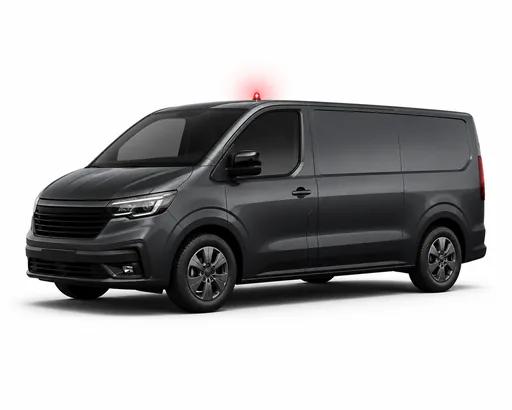
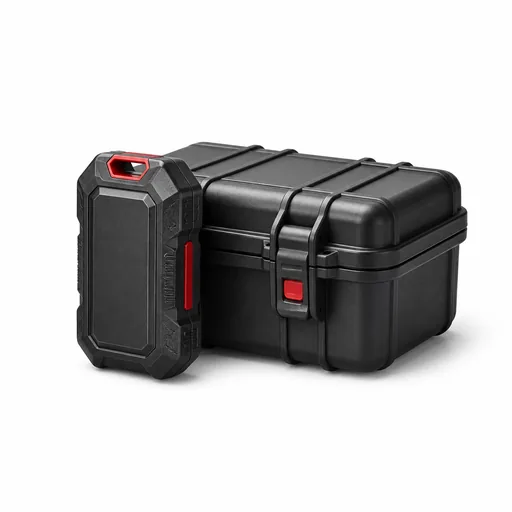
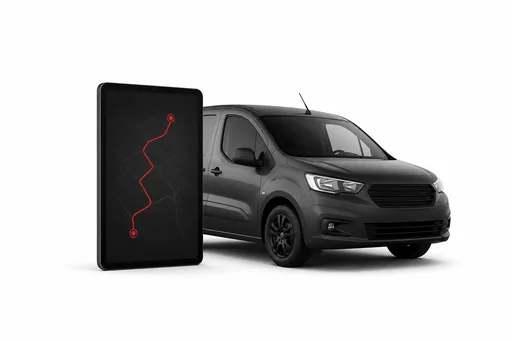

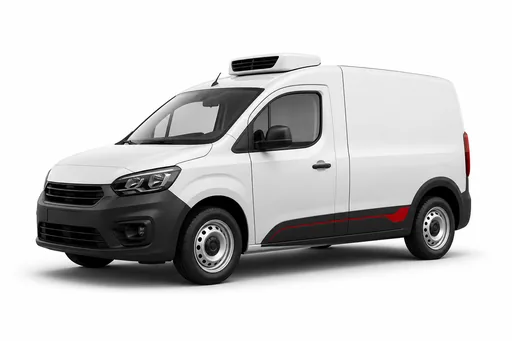
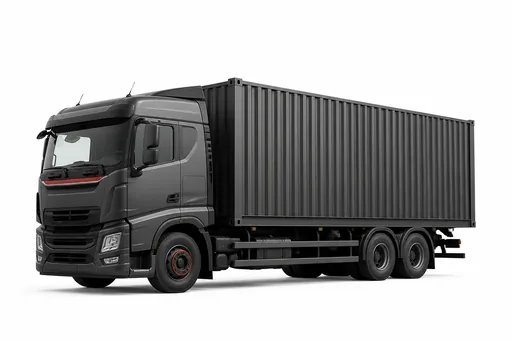
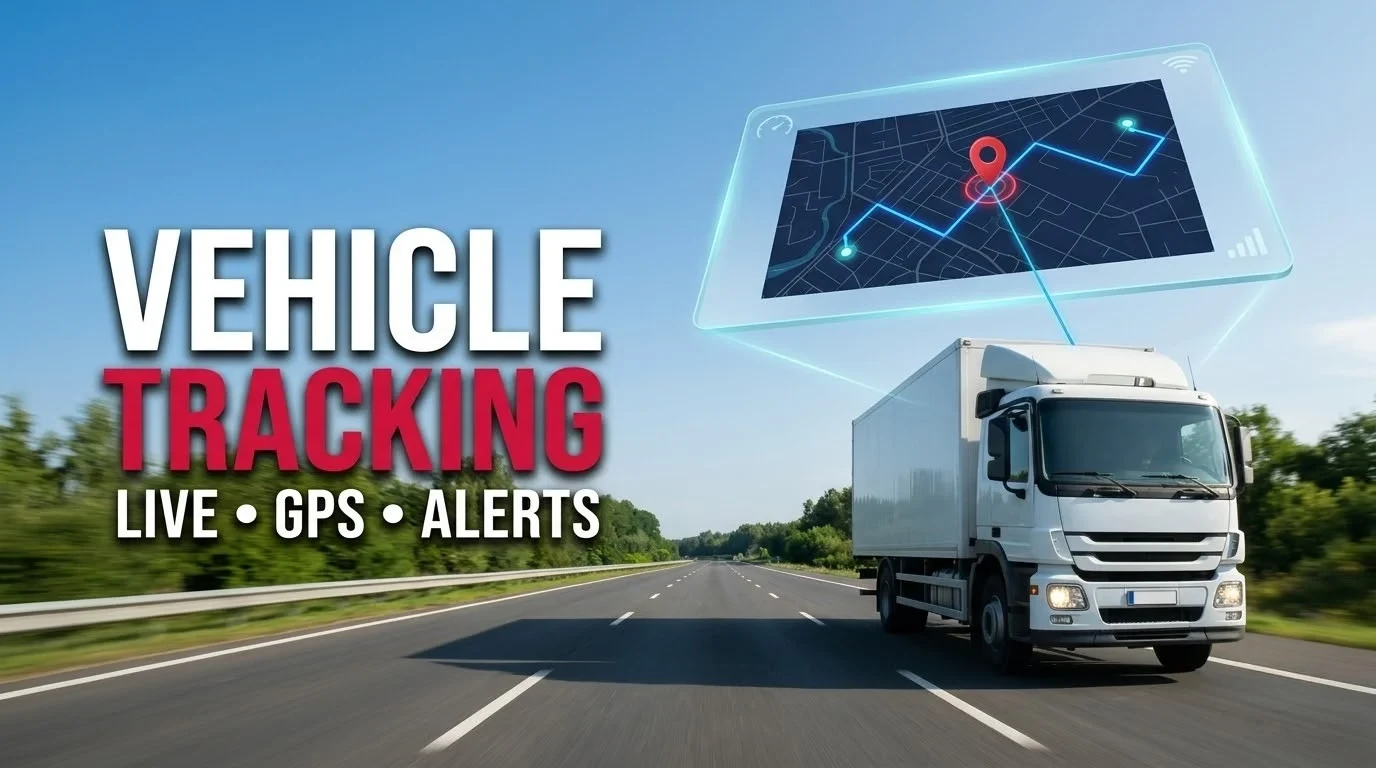
A vehicle tracking system (VTS) is a GPS tracking device installed in a vehicle, connected over the mobile network to cloud software, so fleet managers can see each vehicle's live location, speed, route history, and engine data on a phone or computer.
For Indian fleets, a GPS vehicle tracking system is also a compliance requirement: public service vehicles must carry an AIS 140 certified tracking device with an emergency button. This guide covers how vehicle tracking works, the types of trackers, key software features, AIS 140 rules, what a system costs in India, and how to choose the right one for your fleet.
What Is a Vehicle Tracking System (VTS)?
A vehicle tracking system has three parts that work together:
- The tracking device: a small unit fitted in the vehicle that works out its position from satellite signals and records data such as ignition status, speed, and, depending on the model, engine or sensor readings.
- Connectivity: a cellular module with a SIM card that sends this data to a server every few seconds.
- The software platform: a web dashboard and mobile app that turn the raw data into live maps, alerts, and reports.
A standalone GPS tracker only tells you where something is. A complete VTS adds the software layer, and that is where the value for a business lies: knowing which vehicle is idling, which driver is speeding, which truck is due for service, and which delivery is running late.
How Does a GPS Vehicle Tracking System Work?
Most vehicle tracking systems in India are GPS and GSM based: satellites provide the position, and the mobile network carries the data. The process runs in a continuous loop.
- Positioning: The device's satellite receiver picks up signals from navigation satellites and calculates latitude, longitude, speed, and direction. AIS 140 devices also support NavIC (IRNSS), India's own satellite navigation system.
- Data capture: The device records ignition on and off, idling, harsh braking or acceleration, and inputs from optional sensors such as fuel level, cargo temperature, door status, or an emergency button.
- Transmission: A built-in cellular modem sends each data packet to the server. If the vehicle is out of coverage, the device stores the data in its memory and uploads it when the network returns, so the route history has no gaps.
- Processing: Cloud servers match the coordinates to maps, check them against the geofences and rules you have set, and trigger alerts when something needs attention.
- Display: Managers see the results on a web dashboard or mobile app as a live map, trip playback, alerts, and scheduled reports.
Active vs. Passive Vehicle Tracking
Tracking systems fall into two categories based on when the data reaches you.
Active (real-time) tracking
- How data is sent: continuously over the cellular network, usually every few seconds to a minute.
- Live location and instant alerts: yes, including speeding, geofence, and SOS alerts.
- Running cost: the device plus a recurring data and software subscription.
- Best for: delivery, logistics, passenger transport, and any fleet that needs to react during the day.
Passive tracking
- How data is sent: stored on the device and downloaded when the vehicle returns to base.
- Live location and instant alerts: no.
- Running cost: lower, as there is usually no data plan.
- Best for: low-budget reviews of mileage and routes after the fact.
Most commercial fleets now use active tracking. Good active devices also store data like a passive tracker when there is no signal, so you get the benefits of both.
Types of Vehicle Tracking Devices
The right hardware depends on the vehicle, how quickly you need it installed, and whether you need regulatory approval. Anstel's GPS vehicle tracking system range covers each of these categories.
Plug-and-play OBD-II tracker
- Installation: plugs into the vehicle's diagnostic port in minutes.
- Power: the vehicle battery, through the port.
- Best for: cars and light commercial vehicles, quick rollouts, and reading engine data.
Hardwired GPS tracker
- Installation: wired into the vehicle's electrical system by a technician.
- Power: the vehicle battery, with an internal backup battery.
- Best for: trucks, buses, and older vehicles that need tamper resistance or extra sensors.
Battery-powered tracker
- Installation: mounted anywhere, with no wiring.
- Power: a long-life internal battery.
- Best for: trailers, containers, generators, and construction equipment without a power supply.
AIS 140 certified VLT device
- Installation: fitted by an authorised installer and registered with the state backend.
- Power: the vehicle battery, with an internal backup battery.
- Best for: buses, taxis, and other public service vehicles, plus goods vehicles with a national permit.
If your vehicles fall under India's tracking mandate, choose a certified AIS 140 GPS tracking device. Transport departments check for an approved, working device during registration, permit renewal, and fitness certification, and a standard tracker will not meet the requirement.
Key Features of Vehicle Tracking System Software
Real-time location tracking
A real time vehicle tracking system shows every vehicle on a live map with its speed, direction, and status. Ask providers how often the device reports its position while moving: an update every 10 seconds gives a far more accurate picture than one every few minutes.
Geofencing and custom alerts
Draw virtual boundaries around depots, customer sites, or restricted areas and get notified when a vehicle enters or leaves them. Alerts can also flag over-speeding, long idling, unauthorised night-time use, or device tampering.
Route history and trip playback
Replay any trip to see the exact route, every stop, and the time spent at each location. Trip history helps settle disputes about delivery times and verify mileage claims.
Driver behaviour monitoring
The system scores drivers on harsh braking, rapid acceleration, sharp cornering, and speeding. These scores give you a fair basis for coaching and help reduce reckless driving. For camera-based detection of fatigue and distraction, pair tracking with a driver monitoring system.
Fuel monitoring
Idling reports show where fuel is being wasted, and an optional fuel level sensor can flag sudden drops in the tank that may point to theft.
Maintenance reminders and diagnostics
Schedule servicing by distance travelled or engine hours instead of guesswork. Devices that read engine data can also report diagnostic trouble codes (DTCs), so small faults are fixed before they cause a breakdown.
Reports, integrations, and mobile apps
Automated daily or weekly reports cover trips, distance, stoppages, and driver scores. An API lets you send tracking data to your ERP, transport management, or dispatch software, and a mobile app keeps managers informed away from the desk.
Benefits of a Vehicle Tracking System for Fleets
- Lower fuel costs: cutting idling, unauthorised trips, and detours reduces fuel spend, which is usually a fleet's largest running cost.
- Safer driving: drivers who know their driving is measured tend to drive more carefully, which means fewer accidents and lower repair bills.
- Theft prevention and recovery: instant alerts for after-hours movement, and a live location to share with the police if a vehicle is stolen.
- Better customer service: accurate arrival times for customers, and trip history as proof of delivery. For delivery fleets, pair tracking with last mile delivery software.
- Higher vehicle utilization: see which vehicles sit idle and plan jobs so the fleet does more work with the same number of vehicles.
- Easier compliance: digital trip records and AIS 140 reporting replace manual logbooks.
Who Uses Vehicle Tracking Systems in India?
Any organisation that runs vehicles can benefit from a connected fleet platform. Common users include:
- Logistics and transport companies tracking trucks on long-haul routes and monitoring driving hours.
- School and staff transport operators sharing live bus locations with parents and employees.
- Cab and bus operators meeting AIS 140 rules and responding to emergency button alerts.
- Petroleum and hazardous goods carriers, where oil companies commonly require a VTS on contracted tank trucks to monitor routes and unauthorised stops.
- Cold chain and pharma distributors monitoring cargo temperature along with location.
- Construction and mining companies tracking equipment use and preventing theft at remote sites.
- Government and municipal fleets such as waste collection vehicles, ambulances, and utility vehicles.
AIS 140 and Vehicle Tracking Rules in India
AIS 140 is the Automotive Industry Standard that defines how vehicle location tracking (VLT) devices and emergency buttons must work in Indian public transport. Under rule 125H of the Central Motor Vehicles Rules, introduced by the Ministry of Road Transport and Highways (MoRTH) in 2016, public service vehicles registered on or after 1 January 2019 must be fitted with an AIS 140 compliant tracking device and at least one emergency button. Autorickshaws and e-rickshaws are exempt, and each state sets its own deadline for older vehicles. A separate MoRTH notification in 2018 extended the requirement to goods vehicles with a national permit, and some states also include vehicles carrying hazardous goods.
An AIS 140 device must:
- Be tested and certified by an approved testing agency such as ARAI or ICAT.
- Send location data to the state's command and control centre as well as to your own fleet platform.
- Have one or more emergency (panic) buttons that alert the state's emergency response system when pressed.
- Support India's NavIC (IRNSS) satellite navigation system.
- Store data during network outages and send it once the connection returns.
Vehicle Tracking System Price in India: What You Pay For
The cost of a vehicle tracking system varies with the hardware type, features, and fleet size, but the total always has four parts:
- Device: a one-time hardware cost. Basic plug-in trackers cost the least, while hardwired, AIS 140 certified, and multi-sensor devices cost more.
- Installation: usually a small one-time charge, higher for hardwired devices and for AIS 140 fitment by an authorised technician.
- Subscription: a recurring monthly or annual fee that covers the SIM data plan, software access, and support.
- Add-ons: fuel sensors, temperature probes, and cameras, plus state backend registration or activation charges for AIS 140 devices where they apply.
When you compare quotes, look at the cost over three years rather than the device price alone. A cheap tracker with an expensive subscription or poor support often costs more in the end.
How to Choose the Right Vehicle Tracking System
Use this checklist when you evaluate providers:
- Update frequency: how often does the device report its location while the vehicle is moving?
- Certification: is the device AIS 140 certified, if your vehicles need it?
- Coverage and offline storage: which mobile networks does the SIM use, and how much data can the device store without a signal?
- Ease of use: can your team learn the dashboard and app quickly? Ask for a live demo using your own vehicles.
- Alerts and reports: can you customize alerts and schedule the reports you need?
- Integrations: is there an API for your ERP, transport management, or dispatch software?
- Installation and support: does the provider have installers and support staff in the cities where your vehicles operate?
- Data ownership and security: who owns the data, where is it stored, and can you export it?
- Total cost: what are the device, installation, subscription, and renewal costs over three years?
Vehicle Tracking and Driver Privacy
Businesses can generally track the vehicles they own. When a vehicle is assigned to a specific driver, however, its location data can be personal data under India's Digital Personal Data Protection Act, 2023. Good practice is to tell drivers what is tracked and why, set this out in a written policy, use the data only for operational purposes, and avoid tracking personal use outside working hours where possible. Speak to your legal advisor about the requirements that apply to your business.
Frequently Asked Questions
What is a vehicle tracking system?
A vehicle tracking system (VTS) is a combination of a GPS tracking device fitted in a vehicle, a cellular connection, and software that shows the vehicle's live location, route history, speed, and status on a computer or phone. Businesses use it to manage fleets, improve driver safety, and reduce running costs.
What does VTS stand for?
VTS stands for vehicle tracking system. In India the term is used for GPS trackers on commercial vehicles, including the AIS 140 devices required on buses, taxis, and national permit goods vehicles, and the systems oil companies and large shippers require on contracted trucks.
How does a GPS vehicle tracking system work?
The device in the vehicle calculates its position from satellite signals, then sends that position and other vehicle data over the mobile network to a cloud server. The software displays the data on a live map, stores the trip history, and sends alerts based on rules you set.
Is AIS 140 mandatory for all vehicles in India?
No. AIS 140 tracking devices and emergency buttons are mandatory for public service vehicles such as buses and taxis registered from 1 January 2019, and for goods vehicles with a national permit. Private cars, two-wheelers, autorickshaws, and e-rickshaws are generally not covered. Check your state transport department's notifications for local deadlines.
How much does a vehicle tracking system cost in India?
The cost depends on the device type, features, and fleet size. You pay a one-time charge for the device and installation, plus a recurring subscription for the data plan and software. AIS 140 certified and multi-sensor devices cost more than basic plug-in trackers, so compare the total cost over three years rather than the device price alone.
Can a vehicle tracking system work without mobile network coverage?
Yes. The device keeps calculating its position from satellites without mobile signal and stores the data in its internal memory. When the vehicle is back in coverage, it uploads the stored data so the route history stays complete. Live tracking and alerts resume once the connection returns.
Is it legal to track company vehicles in India?
Businesses can generally install trackers on vehicles they own. If a vehicle is assigned to an identifiable driver, its location data may count as personal data under the Digital Personal Data Protection Act, 2023, so inform drivers about the tracking, explain its purpose in a written policy, and get advice from your legal advisor.
What is the difference between a GPS tracker and a vehicle tracking system?
A GPS tracker is the hardware that records location. A vehicle tracking system includes the tracker plus the connectivity and software that turn location data into live maps, alerts, reports, and driver scores for managing a fleet.
Get Started with Vehicle Tracking
A vehicle tracking system gives you a live view of your fleet, cuts waste, improves driver safety, and keeps you compliant with AIS 140 where it applies. The best results come from choosing hardware that suits each vehicle type and software your team will use every day.
Anstel's connected fleet platform combines tracking hardware with real-time dashboards, alerts, and driver monitoring. Get in touch with the Anstel team to book a demo with your own vehicles.