




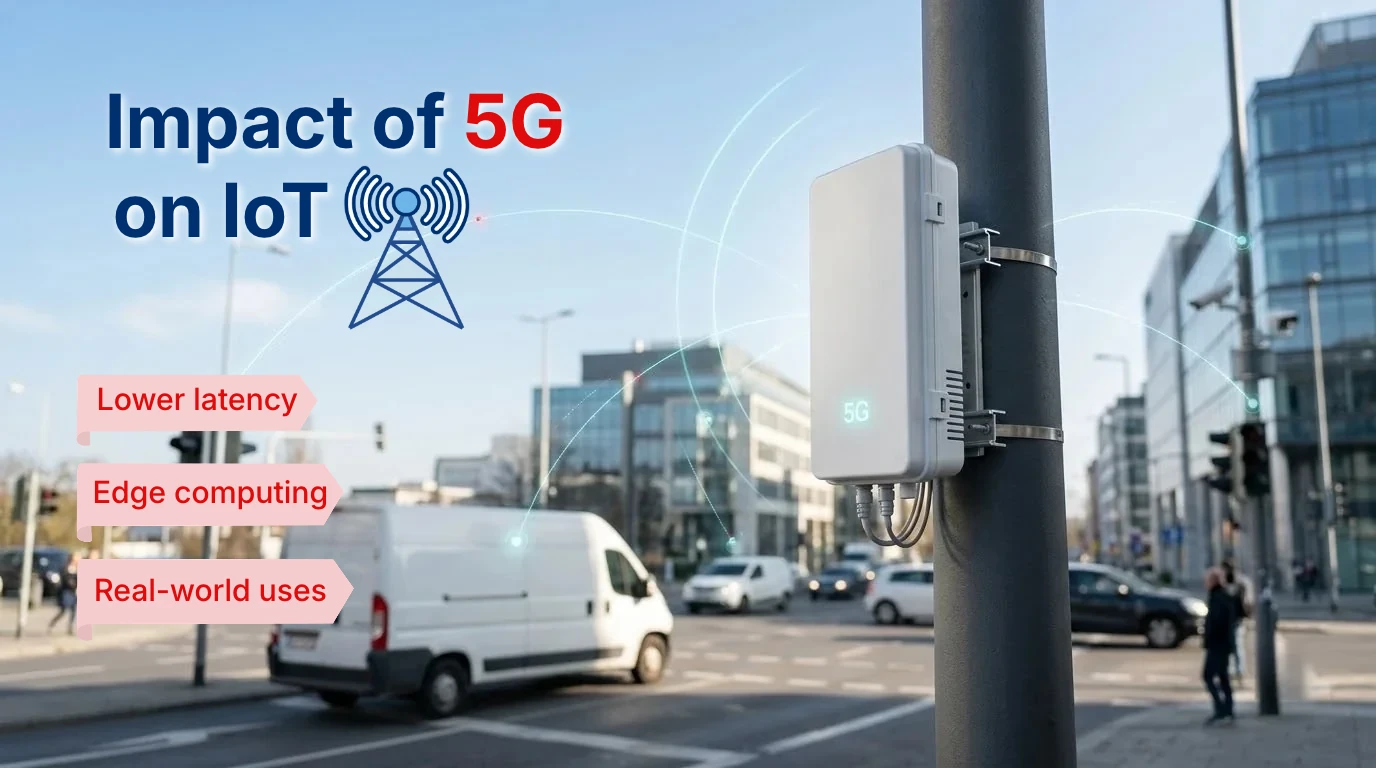
5G changes IoT in three ways: it connects far more devices in the same area, cuts latency so devices can react in near real time, and adds the bandwidth needed for video and large data uploads. Combined with edge computing and network slicing, it lets businesses automate tasks, monitor assets live, and make decisions on data as it arrives instead of hours later.
The timing matters. IoT Analytics expected the number of connected IoT devices worldwide to reach 21.1 billion by the end of 2025 and 39 billion by 2030. Ericsson's June 2026 Mobility Report counted 3.1 billion 5G subscriptions at the end of the first quarter of 2026, forecast to reach 6.4 billion by 2031. In India alone, 5G subscriptions reached 430 million by the end of 2025, 35% of all mobile subscriptions.
This guide explains what 5G brings to IoT, how 5G and edge computing reduce latency, the main use cases, which network each kind of device really needs, and how to plan a 5G IoT rollout.
What this guide covers
- What 5G brings to IoT
- What latency is and why it matters
- How 5G and edge computing reduce latency
- Network slicing
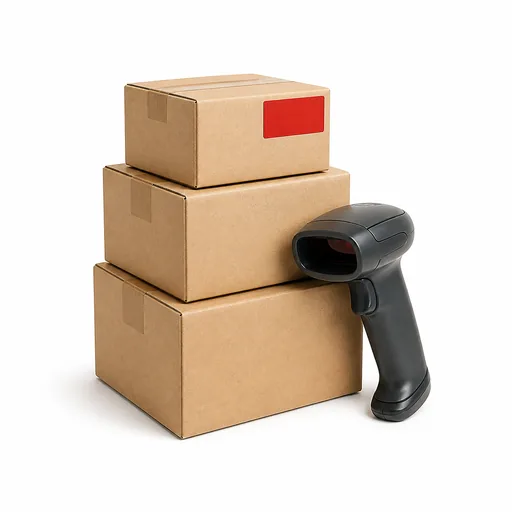
- 5G IoT use cases, including fleets and logistics
- Does every IoT device need 5G?
- Challenges of 5G IoT
- How to plan a 5G IoT implementation
- FAQs
What 5G Brings to IoT
Earlier mobile networks were built mainly for phones. 5G was designed from the start for machines as well as people. The ITU's IMT-2020 standard defines three types of service, and each one solves a different IoT problem:
- Enhanced mobile broadband (eMBB): much higher speeds, with a peak design target of 20 Gbps. This is what lets cameras, video telematics, and augmented reality tools send large amounts of data quickly.
- Massive machine-type communications (mMTC): support for up to 1 million connected devices per square kilometre, so dense deployments of sensors and meters don't overload the network.
- Ultra-reliable low-latency communications (URLLC): a design target of 1 millisecond latency with very high reliability, for machines that must react instantly, such as robots or vehicle safety systems.
These are design targets. Real-world performance depends on the network, the frequency band, and whether the operator runs standalone 5G. Even so, 5G gives IoT far more headroom than 4G for speed, scale, and response time.
What Latency Is and Why It Matters
Latency is the delay between a device sending data and getting a response. Faster download speeds get most of the attention, but for IoT, latency is often more important. A sensor that detects a fault, a vehicle that brakes suddenly, or a machine that needs to stop all depend on how quickly the data reaches a system that can act on it.
High latency causes real problems:
- Slow decisions: if data sits in a queue or travels to a distant data centre, managers and systems act on information that is already out of date.
- Congestion: when the data from many devices exceeds the network's capacity, transmissions are delayed or lost.
- Missed events: safety alerts, equipment faults, and theft attempts lose most of their value if they arrive late.
How 5G and Edge Computing Reduce Latency
5G reduces the delay on the wireless link, but data still has to be processed somewhere. Edge computing, also called multi-access edge computing (MEC), moves that processing out of a distant data centre to servers close to where the data is created, such as a site, a factory, or the operator's local network. The two work together:
- Sense: a device, sensor, or camera captures the data.
- Send: the data travels over a low-latency 5G connection.
- Process: a nearby edge server analyses it straight away.
- Act: the system raises an alert or takes an action, and sends only a summary to the cloud for long-term storage and reporting.
This approach brings several benefits:
- Real-time decisions: field teams and automated systems act on fresh data within moments.
- Less data to move: filtering at the source means only important data travels to the cloud, which saves bandwidth and cost.
- Early fault detection: intelligence at the edge can spot signs of equipment failure before it happens.
- Better visibility: managers get a live view of the whole operation instead of delayed reports.
Network Slicing: A Dedicated Network for Each Job
5G networks are largely software-defined, which allows operators to split one physical network into several virtual networks, called slices. Each slice can have its own speed, latency, and priority settings. A hospital, for example, could give remote surgical equipment its own high-priority slice, separate from patient Wi-Fi traffic, so critical connections are protected even when the network is busy. For businesses, slicing means guaranteed performance for critical IoT devices without building a private network from scratch.
Network slicing depends on standalone 5G, which is still being rolled out. Ericsson reported that more than 90 operators had launched standalone 5G by mid-2026.
5G IoT Use Cases
Industrial Automation and Remote Maintenance
5G lets factories connect robots, machines, and sensors without cables, and control them remotely without loss of performance. High-quality video and augmented reality allow an expert in a central location to guide a local technician or a robot through a repair, which saves travel time and keeps machines running.
Smart Cities and Connected Vehicles
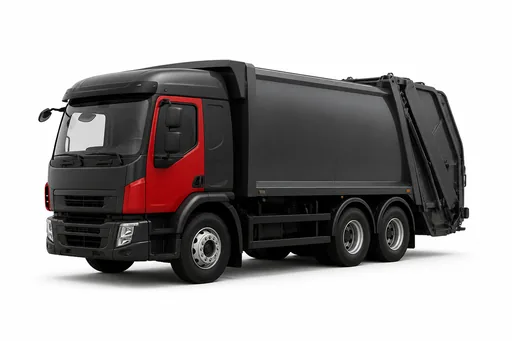
Connected traffic lights, cameras, and parking sensors can direct drivers around accidents and to free parking spaces, reducing congestion and idling. Vehicles can exchange data with each other and with roadside infrastructure, known as vehicle-to-everything (V2X) communication, to warn drivers of hazards. Vehicles can also report the condition of parts such as brakes and batteries, so problems are fixed before they cause a breakdown.
Telehealth and Remote Patient Monitoring
Wearable monitors can send vital signs to doctors continuously, and reliable high-quality video makes remote consultations possible for patients in rural areas far from a specialist. Remote monitoring also helps patients leave hospital sooner while staying under observation, which can reduce costs.
Retail
Shelf sensors, smart cameras, and connected stock systems show low stock, gaps on shelves, and missing items in real time. Staff can use tablets or augmented reality to check store layouts and stock levels, and data-driven forecasts help plan displays and offers.
Supply Chain and Logistics
5G makes it practical to track goods in one system from the factory to the customer. Real-time data from warehouses, vehicles, and shipments gives managers visibility, risk alerts, and forecasts, so they can make better decisions about routes, stock, maintenance, and delivery times. Alerts confirm completed deliveries and flag shipments that are delayed or lost, and data from production, logistics, and sales can be combined to plan ahead and cut lead times.
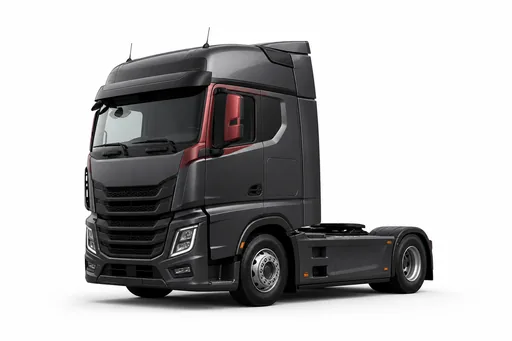
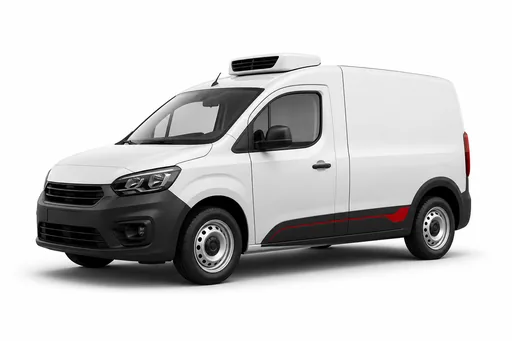
Fleet Management
Fleet telematics already tracks location, speed, trips, and driving behaviour over 4G. 5G adds the capacity for more demanding features:
- Video telematics: AI dashcams can upload event clips and live video faster, so managers see what happened within moments.
- Live driver coaching: real-time alerts and in-cab feedback as risky behaviour happens.
- Dynamic rerouting: routes change automatically based on live traffic, weather, and shipment data.
- Real-time diagnostics: engine data, fuel use, and component wear are monitored continuously, so maintenance can be planned before a failure takes a vehicle off the road.
Does Every IoT Device Need 5G?
No. One of the most common mistakes is assuming every device must move to full 5G. Most IoT devices send small amounts of data and need long battery life more than high speed. The 3GPP standards include several cellular IoT technologies for different needs:
- NB-IoT: for meters and fixed sensors that send tiny amounts of data and need to run for years on a battery.
- LTE-M: for trackers, wearables, and other mobile devices that need low power, good coverage, and support for movement.
- 5G RedCap (reduced capability): a lighter version of 5G for mid-range devices such as video cameras, industrial sensors, and wearables that need more speed than LTE-M but not full 5G.
- Full 5G: for video, augmented reality, robotics, and real-time control.
NB-IoT and LTE-M are not stopgaps. The GSMA has confirmed that they are part of the 5G family for massive IoT and will continue alongside 5G networks. As operators switch off 2G and 3G, choosing the right technology for each device protects your investment for years.
Challenges of 5G IoT
- Coverage: the fastest 5G bands have a short range, and coverage outside cities can be patchy, so check coverage where your devices actually operate.
- Device cost and power: full 5G modules cost more and use more power than LTE-M or NB-IoT.
- Standalone 5G availability: features such as network slicing and the lowest latency depend on standalone 5G, which is not yet available everywhere.
- Security: more connected devices mean a larger attack surface. 5G includes stronger built-in protections, but devices still need secure setup and regular updates. Our separate article "How 5G Improves Security" in the Anstel Knowledge Center covers this in detail.
- Integration: data from new devices has to reach the systems people actually use, such as dashboards, ERP, and maintenance tools.
How to Plan a 5G IoT Implementation
- Start with the problem. Define what you want to improve, such as downtime, delivery times, or safety, and how you will measure it.
- Match each device to the right network. Use NB-IoT or LTE-M for simple sensors and trackers, and 5G where you need video, high speed, or very low latency.
- Check coverage and the operator's plans for 5G, standalone 5G, and the retirement of 2G and 3G in each area you operate.
- Decide where data is processed: on the device, at the edge, or in the cloud.
- Build in security from day one, with private connectivity, strong device identity, and over-the-air updates.
- Run a pilot, measure the results, and scale up once the numbers prove the case.
How Anstel Helps
Anstel builds IoT and connected fleet solutions for businesses and telecom operators across Australia, India, New Zealand, Fiji, and Papua New Guinea. Its Autonautics platform brings data from trackers, AI cameras, and sensors into one dashboard for fleet tracking, video telematics, fuel management, maintenance, and asset monitoring. Talk to the Anstel team about which devices and connectivity suit your fleet and assets today, and how to prepare for 5G.
Frequently Asked Questions
What is the impact of 5G on IoT?
5G lets IoT networks connect far more devices in the same area, reduces latency so devices can react in near real time, and provides the bandwidth needed for video and large data. Together with edge computing and network slicing, it makes large-scale automation, live monitoring, and real-time decisions practical.
How does 5G reduce latency?
5G uses a faster, more efficient radio interface and a modern network design that shortens the time data takes to travel. Its design target for ultra-reliable low-latency communications is 1 millisecond. Combined with edge computing, which processes data close to the device, it cuts the total delay between an event and the response.
What is edge computing in 5G?
Edge computing, or multi-access edge computing (MEC), processes data on servers close to where it is created instead of in a distant data centre. With 5G, it lets devices get a response in milliseconds, reduces the data sent to the cloud, and supports real-time decisions on site.
What is network slicing in 5G?
Network slicing splits one physical 5G network into several virtual networks, each with its own speed, latency, and priority. Critical IoT devices can have a dedicated slice that stays reliable even when the rest of the network is busy. It requires standalone 5G.
Do IoT devices need 5G?
Not always. Simple sensors and trackers often work best on NB-IoT or LTE-M, which use little power and are part of the 5G family for massive IoT. Full 5G is best for devices that need video, high speed, or very low latency, and 5G RedCap suits mid-range devices in between.
How does 5G help fleet management?
5G supports faster video uploads from AI dashcams, live driver coaching, dynamic rerouting based on traffic and weather, and continuous vehicle diagnostics. Basic GPS tracking works well on 4G and LTE-M, so 5G matters most for video-heavy and real-time features.
Building IoT for the 5G Era
5G is not just a faster network. It is a platform for connecting billions of devices and acting on their data in real time. The businesses that gain most will match each device to the right network, process data where it makes sense, and build security in from the start.
Get in touch with the Anstel team to plan connected devices and fleet technology that are ready for the 5G era.