










IoT system integrators deliver real business value when they turn connected devices into measurable results for their clients: less downtime, lower running costs, safer operations, and better decisions. The technology partner they choose decides how quickly they get there, how much risk they carry, and whether a project ever makes it past the pilot.
The opportunity is large. IoT Analytics counted 18.5 billion connected IoT devices worldwide in 2024 and expects 39 billion by 2030. Yet many projects never reach full rollout: in Microsoft's 2019 IoT Signals research of more than 3,000 business and IT decision-makers, 30% of respondents said their IoT projects failed at the proof-of-concept stage, most often because costs ran too high or the business benefits were unclear.
This guide explains what industrial IoT solutions include, where they create value, why projects stall, and how system integrators can choose an IoT partner that helps them deliver results that scale.
What this guide covers
- What an IoT system integrator does
- What industrial IoT solutions include
- Where industrial IoT delivers business value
- Why IoT projects stall after the pilot
- How to choose the right IoT partner: 10 checks
- Single partner vs. multiple vendors
- How to prove business value to your client
- FAQs
What Does an IoT System Integrator Do?
An IoT system integrator designs, builds, and supports connected solutions for a client, bringing together hardware, connectivity, software, and existing business systems so they work as one. A typical project includes:
- Discovery: understanding the client's problem, sites, assets, and the results they need.
- Solution design: choosing sensors, devices, gateways, networks, and the platform.
- Integration: connecting IoT data to the client's ERP, maintenance, SCADA, or transport management systems.
- Deployment: installing, configuring, and testing devices in the field.
- Support and growth: monitoring, updates, user training, and adding new sites or use cases over time.
Clients rarely buy devices for their own sake. They buy an outcome, and the integrator is the one accountable for delivering it.
What Are Industrial IoT Solutions?
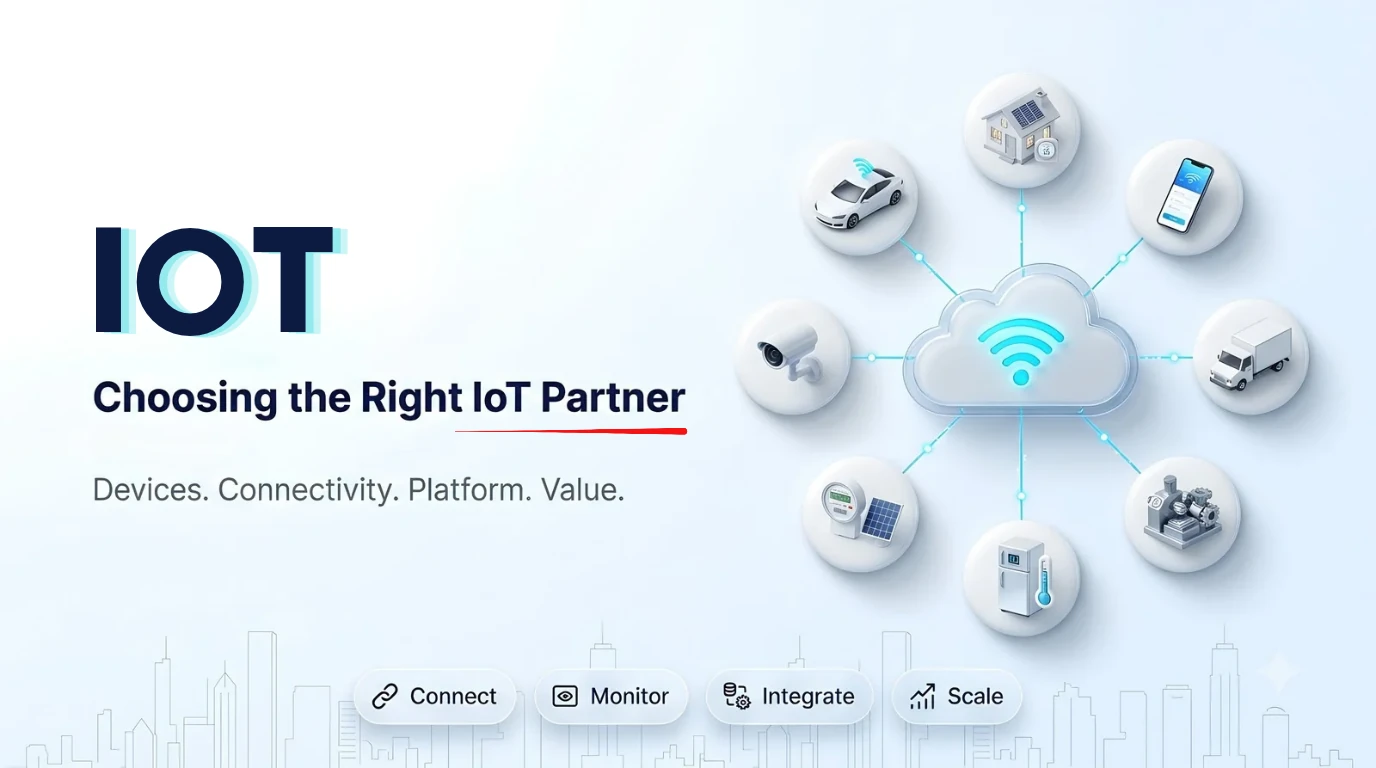
Industrial IoT (IIoT) solutions use connected sensors, devices, and software to collect and analyse data from machines, vehicles, and infrastructure. Every solution is built from the same layers:
- Sensors and devices: measure temperature, humidity, vibration, fuel, location, power, door status, and equipment condition.
- Connectivity: carries the data over 4G LTE, LTE-M, NB-IoT, LoRaWAN, Wi-Fi, or Bluetooth, depending on range, power, and cost.
- Gateways and edge: collect data from local sensors and machines and pass it to the cloud, often filtering it first.
- IoT platform: stores the data and provides dashboards, alerts, reports, rules, and device management.
- Integration: APIs and webhooks send the data to ERP, CRM, maintenance, and other business systems.
- Analytics and action: turn readings into trends, predictions, and automated workflows that people act on.
A weakness in any one layer, such as a device that drops offline or a platform without an API, can stall the whole project.
Where Industrial IoT Delivers Real Business Value
The strongest IoT projects start with a business problem and a number that proves it has been solved. These are the use cases where integrators most often show clear value:
- Condition monitoring and predictive maintenance: vibration, temperature, and power sensors spot unusual behaviour before a machine fails. Prove it with: unplanned downtime hours and maintenance cost.
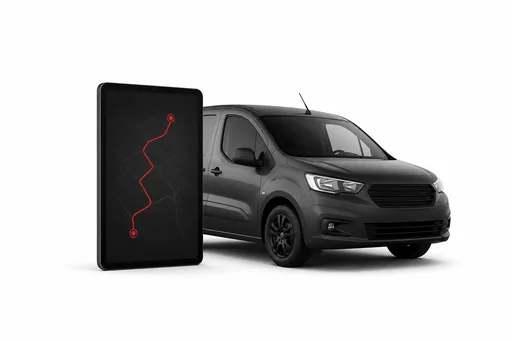
- Asset and fleet tracking: GPS trackers show where vehicles, trailers, containers, and equipment are and how much they are used. Prove it with: utilisation rate and theft or loss incidents.
- Cold chain and environmental monitoring: temperature and humidity sensors protect food, pharmaceuticals, and sensitive stock in cold rooms and vehicles. Prove it with: temperature excursions and spoiled stock.
- Energy and generator monitoring: meters and fuel sensors show where energy is wasted and when backup generators run. Prove it with: energy or fuel cost per site.
- Remote site monitoring: tanks, pumps, telecom towers, and utility sites report their status without a site visit. Prove it with: site visits avoided and response time.
- Safety and compliance: sensors, cameras, and automatic logs support safety rules and audits. Prove it with: incidents and time spent preparing audit records.
Why IoT Projects Stall After the Pilot
Pilots often work. Rolling them out across hundreds of devices and many sites is where problems appear:
- Too many vendors: separate suppliers for devices, SIMs, and software means more contracts, more finger-pointing, and slower fixes.
- Integration left too late: data that never reaches the client's existing systems gets ignored after the first few weeks.
- Connectivity gaps: devices chosen for the lab may not work on the networks available at remote sites.
- Security added at the end: in the same Microsoft research, 97% of respondents had security concerns about IoT, and late fixes are costly.
- Costs that grow with scale: per-device platform fees, data plans, and support can make a profitable pilot unprofitable at full size.
- No agreed success measure: without a baseline and a target, nobody can show the project paid off.
- Skills shortages: 47% of respondents in the same research said there were not enough skilled workers to build and maintain IoT solutions.
Most of these are partner problems as much as technical ones, which is why the choice of IoT partner matters so much to an integrator.
Why System Integrators Need the Right IoT Partner
A good IoT partner does more than supply hardware. For a system integrator, the right partner means:
- Faster delivery: proven devices, a ready platform, and tested integrations cut months from a project.
- Lower project risk: one accountable partner for devices, data, and platform makes problems quicker to find and fix.
- Room to scale: the same platform can add new devices, sites, and use cases without starting again.
- Recurring revenue: subscription platforms let integrators add monitoring, support, and managed services rather than one-off installation fees.
- Repeatable solutions: a solution built once for one client can be packaged and sold to others in the same industry.
How to Choose the Right IoT Partner: 10 Checks
- End-to-end capability: can the partner cover devices, connectivity, platform, and support, or will you be stitching several suppliers together?
- Device choice: does the platform support hardware from several manufacturers, so you can pick the right sensor or tracker for each job?
- Connectivity: which networks and technologies are supported (4G LTE, LTE-M, NB-IoT, LoRaWAN), and how do devices behave when coverage drops? In India, SIM-based machine-to-machine (M2M) connections use 13-digit numbers, and providers of M2M services may need to register with the Department of Telecommunications, so confirm how your partner handles this.
- Open integration: is there a documented REST API, webhooks, and support for common industrial protocols, so data reaches the client's systems?
- Device management: can you configure devices, monitor their health, and update firmware over the air across the whole fleet?
- Security: does the partner encrypt data, control access, and patch devices regularly? Frameworks such as the NIST Cybersecurity Framework 2.0 and the IEC 62443 standards for industrial systems are good benchmarks to ask about.
- Scalability and pricing: what does the solution cost at 50, 500, and 5,000 devices, and is the pricing model easy to pass on to clients?
- Local support: are there support teams and service levels in the regions where your clients operate?
- Partner model: does the partner offer technical onboarding, sales support, and the option to deliver under your own brand?
- Proven deployments: can the partner show live projects in your target industries, and will those customers talk to you?
Questions to Ask an IoT Partner Before You Sign
- Which devices and sensors are already integrated with your platform?
- How long does a typical pilot take, from devices on site to live data?
- What happens to data when a device loses connection?
- Who owns the data, and how can my client export it?
- How are firmware updates and security patches delivered?
- What does support look like after go-live, and in which time zones?
- How do you work with integrators on pricing, branding, and joint sales?
Single IoT Partner vs. Multiple Vendors
Some integrators build every project from separate best-of-breed suppliers. Others work with one partner that covers most of the stack. Each approach has a place:
- One end-to-end partner: faster deployment, one point of accountability, devices and platform already tested together, and simpler pricing. The trade-off is less freedom to mix niche components, so check that the platform supports third-party devices.
- Multiple vendors: maximum choice for each layer and useful for highly specialised projects. The trade-offs are more integration work, more contracts to manage, slower troubleshooting, and costs that are harder to predict.
For most commercial and industrial projects, a single partner with an open, device-agnostic platform gives integrators the best of both: one accountable partner, with the freedom to add specialist hardware when a project needs it.
How to Prove Business Value to Your Client
Clients renew and expand IoT projects when the results are clear. A simple, repeatable approach:
- Agree the problem and the measure. For example, "cut unplanned downtime on line 2" measured in hours per month.
- Record a baseline for at least one to three months before devices go live.
- Run a proof of value, not just a proof of concept. Set success criteria up front, such as a target reduction, and a date to review them.
- Plan the rollout before the pilot ends, including device numbers, sites, integration, support, and the full cost at scale.
- Report results regularly in the client's own terms: hours saved, losses avoided, and cost per site.
A simple ROI formula keeps the conversation focused: ROI (%) = (annual savings − annual solution cost) ÷ annual solution cost × 100.
How Anstel Supports System Integrators
Anstel Global has built IoT solutions since 2010, working with telecom operators such as Telstra, Optus, Vodafone, Spark NZ, Unlimit (Reliance), and Digicel, and with teams in Australia, India, Fiji, and Papua New Guinea. Its partner ecosystem is designed for technology and device partners, connectivity partners, and channel and implementation partners, including system integrators.
- Autonautics platform: a connected operations platform with modules for Connected Fleet, Connected Monitor, Last Mile, Patrol Connect, and Job Scheduling, plus dashboards, alerts, reports, and analytics on web and mobile.
- Connected Monitor: real-time monitoring of machines, vehicles, and infrastructure, with smart alerts and rule-based workflows triggered by sensor readings or events.
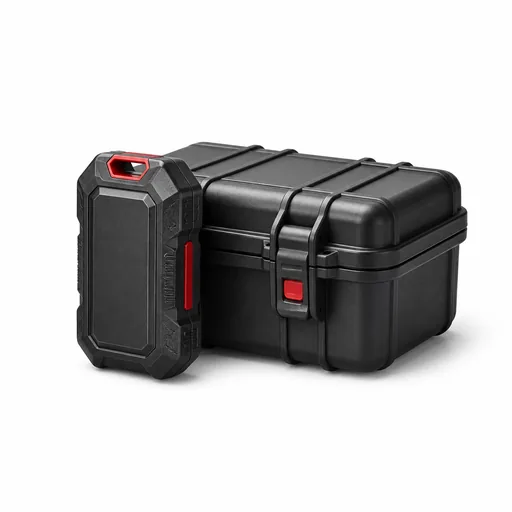
- Device choice: support for more than 20 device models, including GPS and telematics hardware from makers such as Teltonika, Queclink, and Jimi, plus fuel, temperature, and industrial sensors and gateways.
- Open integration: a REST API and webhooks to connect data with ERP, CRM, HRMS, and other business systems.
- Industry coverage: transport and logistics, manufacturing, energy and utilities, smart cities, agriculture, healthcare, and cold chain.
- A clear way to work together: Discover the problem and market, Validate technical and commercial fit, Enable the solution and teams, then Grow proven opportunities.
Frequently Asked Questions
What is an IoT system integrator?
An IoT system integrator is a company that designs, builds, and supports connected solutions for clients. It brings together sensors, devices, connectivity, an IoT platform, and the client's existing business systems so they work as one solution that delivers a measurable result.
What are industrial IoT solutions?
Industrial IoT solutions use connected sensors, devices, and software to collect and analyse data from machines, vehicles, and infrastructure. They are used for condition monitoring, predictive maintenance, asset and fleet tracking, cold chain monitoring, energy management, and remote site monitoring.
How do I choose the right IoT partner?
Look for a partner that covers devices, connectivity, and platform; supports hardware from several manufacturers; offers open APIs and over-the-air device management; takes security seriously; prices fairly at scale; provides local support; and can show live projects in your target industries.
Why do IoT projects fail?
IoT projects most often fail because costs grow too high at scale, the business benefits are unclear, integration with existing systems is left too late, connectivity does not work at every site, or security is added at the end. Agreeing a clear measure of success before the pilot avoids many of these problems.
What is the difference between an IoT platform and an IoT solution?
An IoT platform is the software that collects, stores, and manages device data and provides dashboards, alerts, and APIs. An IoT solution is the complete package that solves a specific problem, combining the platform with the right devices, connectivity, integration, and support.
How do system integrators make money from IoT?
Integrators earn from solution design, hardware, installation, and integration, and increasingly from recurring services such as platform subscriptions, monitoring, support, and analytics. Recurring services are usually the most valuable part of an IoT business over time.
From Pilot to Real Business Value
Connected devices are only the starting point. System integrators deliver real value when every layer works together, the results are measured in the client's own terms, and the solution can grow from one site to hundreds. The right IoT partner makes each of those steps easier.
Get in touch with the Anstel partnerships team to talk about your next IoT project.