
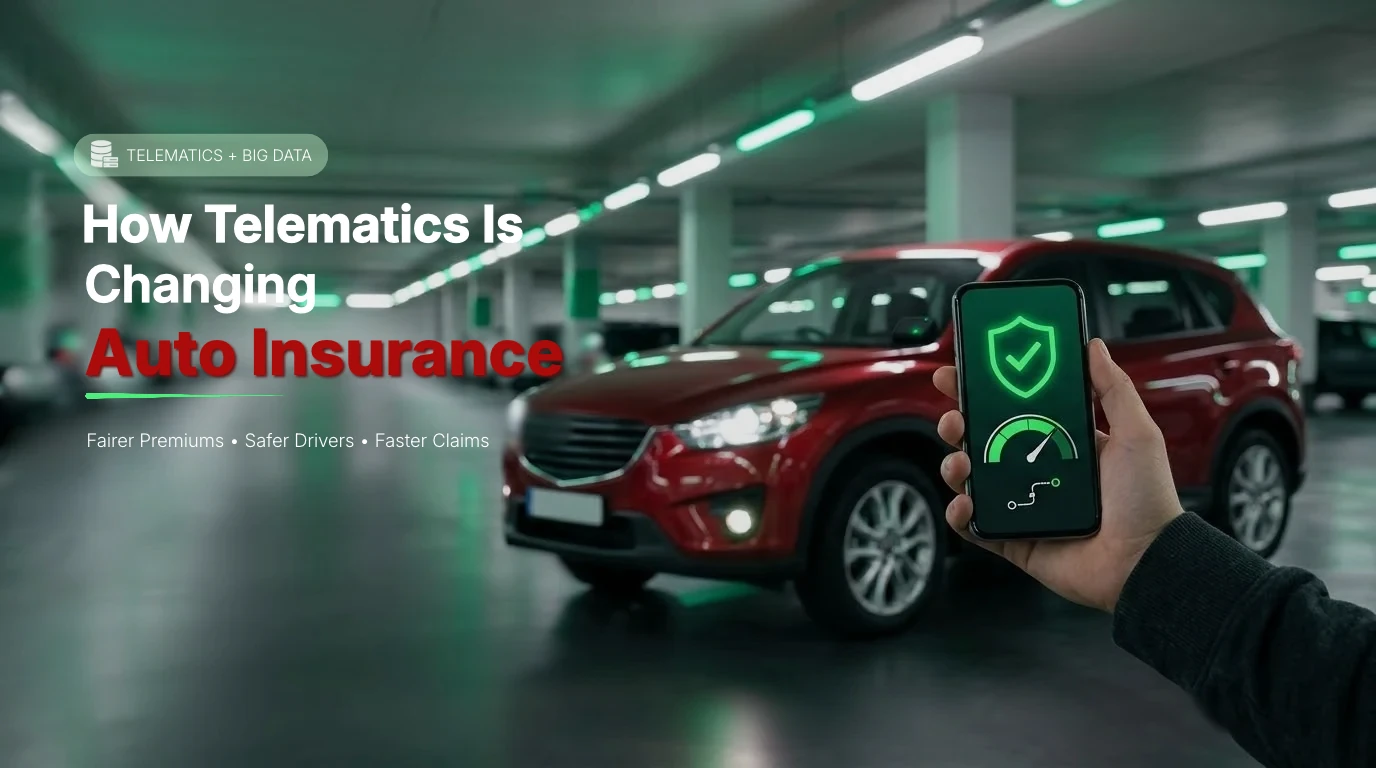
Telematics helps the auto insurance industry by giving insurers real driving data instead of estimates. Devices and apps record how far, when, and how safely a vehicle is driven. Insurers use this data, combined with big data analytics, to price premiums more fairly, reward safe drivers, detect fraud, recover stolen vehicles, and settle claims faster. For drivers and fleets, it means premiums that reflect how they actually drive.
Insurance has always been a data business, but traditional pricing relied on broad factors such as age, vehicle type, and claims history. Telematics and big data let insurers understand each driver's real risk. This guide explains how insurance telematics works, the main types of usage-based insurance, how insurers use telematics and big data across pricing and claims, and what it means for fleets.
What this guide covers
- What insurance telematics is
- How telematics insurance works
- Types of usage-based insurance
- How insurers use telematics and big data
- Telematics insurance in India
- What it means for fleets
- Privacy and consent
- FAQs
What Is Insurance Telematics?
Insurance telematics uses data from a vehicle, a plug-in device, or a smartphone app to measure how a vehicle is used and driven. The data is sent to the insurer, with the customer's consent, and used to assess risk. A typical setup includes GPS for location and distance, motion sensors that detect braking, acceleration, cornering, and impacts, a mobile connection to send the data, and software that analyses it.
How Telematics Insurance Works
- Collect: a factory-fitted system, an OBD-II plug-in device, a fleet tracker, or a smartphone app records trips, distance, time of day, speed, braking, and acceleration.
- Score: the insurer turns this data into a driving score that reflects risk.
- Price: safer and lower-mileage drivers pay less, often through discounts at renewal or rewards during the policy.
- Claim: if there is an accident, trip and impact data help show what happened and speed up the claim.
Types of Usage-Based Insurance
- Pay As You Drive (PAYD): the premium is based mainly on how many kilometres the vehicle is driven. It suits people and businesses whose vehicles are used less.
- Pay How You Drive (PHYD): the premium is based on driving behaviour, such as speeding, harsh braking, and night-time driving. Safe drivers pay less.
- Manage How You Drive: insurers give drivers feedback and coaching through an app, helping them improve and earn rewards.
How Insurers Use Telematics and Big Data
Big data means combining very large, varied data sets, such as telematics, claims history, weather, road, and traffic data, and analysing them with AI and machine learning. In auto insurance, it is used across the whole policy lifecycle:
Pricing and Underwriting
Instead of placing drivers into broad risk groups, insurers can price each policy on real behaviour and exposure, such as distance, time of day, and the roads driven. Low-risk drivers get lower premiums, and insurers avoid under-pricing high-risk drivers.
Rewarding Safe Driving
Discounts, cash-back, and rewards for good driving scores encourage safer habits. Over time, this can reduce accidents for everyone on the road.
Faster Claims and First Notice of Loss
Impact sensors can detect a crash and alert the insurer immediately, sometimes before the driver calls. Trip data and video help reconstruct the accident, even when the driver can't remember details, and analytics can score claims by complexity so they reach the right adjuster quickly.
Fraud Detection
Data on location, speed, and impact can confirm or challenge the details of a claim, helping insurers spot exaggerated or staged claims.
Theft Recovery
GPS tracking helps locate and recover stolen vehicles quickly, which reduces losses for insurers and owners.
Loss Prevention
Insurers can use data proactively, by coaching drivers, alerting customers to risky patterns, and offering services such as roadside assistance, rather than only paying out after an incident.
Young and New Drivers
Telematics programmes for young drivers let parents and insurers see speeding, harsh braking, and late-night driving, with coaching and discounts for improvement.
Telematics Insurance in India
In July 2022, India's insurance regulator, IRDAI, allowed general insurers to offer technology-enabled motor insurance add-ons, including Pay As You Drive and Pay How You Drive, on top of the basic own-damage cover. It also allowed floater policies covering several vehicles owned by the same person. Several Indian insurers now offer these options, often through a smartphone app or a connected device.
What It Means for Fleets
Fleets already collect the data insurers value most. A well-run telematics programme can help a fleet:
- Negotiate premiums: show insurers evidence of safe driving, low speeding rates, and fast incident response.
- Reduce claims: driver coaching, AI cameras, and maintenance alerts prevent accidents in the first place.
- Settle claims faster: trip data and video clips show exactly what happened, and protect drivers from false blame.
- Recover stolen vehicles: live tracking and geofence alerts help locate vehicles quickly.
- Prove compliance: records of maintenance, driver hours, and safety training support insurance and regulatory requirements.
Privacy and Consent
Driving and location data are personal data. Insurers and fleets must tell drivers what data is collected and why, get consent or another lawful basis, keep the data secure, and use it only for the stated purpose. In India, the Digital Personal Data Protection Act 2023 and its Rules set out these duties, and drivers should check what an insurance programme collects before they sign up.
How Anstel Helps
Anstel's Autonautics platform gives fleets the data that matters to insurers in one dashboard: live tracking and trip history, driver behaviour scores, AI camera events, crash and harsh driving alerts, maintenance records, and reports that can be shared with insurers and brokers.
Frequently Asked Questions
How does telematics help the auto insurance industry?
Telematics gives insurers real data on how, when, and how far vehicles are driven. They use it to price premiums more accurately, reward safe drivers, detect fraud, recover stolen vehicles, and settle claims faster.
What is usage-based insurance?
Usage-based insurance is motor insurance priced on how a vehicle is actually used. Pay As You Drive is based mainly on distance, while Pay How You Drive is based on driving behaviour such as speeding and harsh braking.
What is the impact of big data on insurance?
Big data lets insurers combine telematics, claims, weather, road, and customer data and analyse it with AI. This improves pricing and underwriting, speeds up claims, helps detect fraud, and supports proactive loss prevention.
Is telematics insurance available in India?
Yes. In July 2022, IRDAI allowed general insurers to offer Pay As You Drive and Pay How You Drive add-ons to motor own-damage cover, and several insurers now offer them.
Can telematics lower fleet insurance premiums?
It can. Fleets that use telematics to improve driver behaviour, reduce accidents, and respond quickly to incidents can show insurers evidence of lower risk, which supports better premiums and terms.
What data does insurance telematics collect?
Typically distance, trip times, location, speed, harsh braking, acceleration, cornering, and impacts. Some programmes also use phone use detection or camera footage. Customers should check exactly what is collected before signing up.
Fairer Insurance Built on Real Data
Telematics and big data are moving auto insurance from guesswork to evidence. Safe drivers and well-run fleets pay less, claims are settled faster, and fewer accidents happen in the first place.
Get in touch with the Anstel team to see how fleet data can support safer driving and better insurance outcomes.