
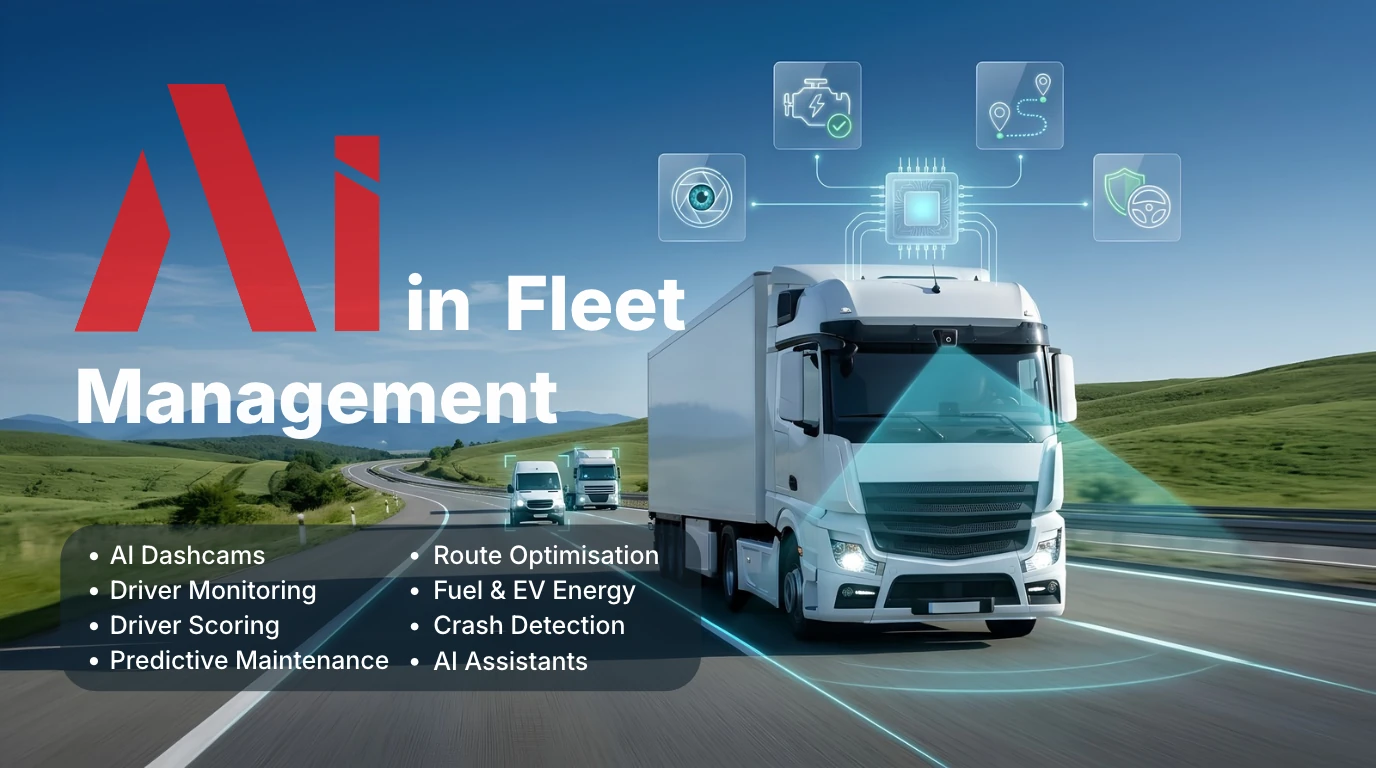
AI in fleet management uses machine learning and computer vision to analyse data from GPS trackers, cameras, and vehicle sensors, and turn it into warnings, predictions, and recommendations. It spots risky driving as it happens, predicts breakdowns before they occur, plans better routes, and highlights the issues managers most need to act on, so fleets become safer and cheaper to run.
Telematics has given fleets huge amounts of data. The problem is that nobody has time to watch hours of camera footage or read every report. AI does that work automatically. This guide explains how AI fleet management works, the eight main ways AI is changing fleets, the benefits and challenges, and how to get started.
What this guide covers
- What AI in fleet management means
- How AI fleet management works
- 8 ways AI is changing fleet management
- Benefits of AI for fleets
- Challenges to plan for
- How to get started
- FAQs
What AI in Fleet Management Means
Traditional telematics works on fixed rules: an alert fires when a vehicle goes over a speed limit or leaves a geofence. AI goes further. It learns patterns from large amounts of data, understands context, and predicts what is likely to happen next. It doesn't replace telematics; it builds on the data telematics collects.
AI is assistive technology. It helps drivers and managers make better decisions, but people stay in control of the vehicle and the business.
How AI Fleet Management Works
- Collect: GPS trackers, dashcams, driver-facing cameras, engine data, and sensors record what is happening on every trip.
- Analyse: AI models, some running on the camera itself and some in the cloud, look for patterns such as signs of fatigue, unusual engine readings, or routes that often run late.
- Alert: drivers get in-cab warnings in real time, and managers get prioritised alerts and short video clips instead of hours of footage.
- Improve: the results feed into coaching, maintenance plans, and route planning, and the models become more accurate as they learn from more data.
8 Ways AI Is Changing Fleet Management
1. AI Dashcams
Road-facing AI cameras recognise risky events such as harsh braking, tailgating, rolling through stop signs, and near misses. Instead of reviewing hours of footage, managers see only the clips that matter, already categorised by event type.
2. Driver Monitoring
Driver-facing cameras use computer vision to detect drowsiness, distraction, phone use, smoking, and missing seat belts, based on signs such as eye closure, head position, and yawning. The driver gets an immediate warning, and serious events are reported to the fleet.
3. Driver Scoring and Coaching
AI combines speeding, harsh driving, phone use, and fatigue events into fair, consistent driver scores. Managers can see who needs coaching and on what, recognise their safest drivers, and build training around each driver's real habits.
4. Predictive Maintenance
By analysing engine data, fault codes, and usage patterns, AI can warn that a part is likely to fail before it does, such as a battery losing strength or brakes wearing faster than expected. Maintenance is scheduled based on real wear, which prevents breakdowns and avoids unnecessary servicing.
5. Route Optimisation and Arrival Times
AI learns from historical trips, traffic, weather, and delivery times to plan better routes and predict more accurate arrival times. When plans change during the day, it can re-plan routes and reassign jobs quickly.
6. Fuel and Electric Vehicle Energy
AI finds the causes of wasted fuel, such as idling, aggressive driving, or inefficient routes, and flags sudden fuel drops that may point to theft. For electric vehicles, it helps predict range and plan charging around routes and electricity costs.
7. Crash Detection and Claims
When sensors and cameras detect a collision, AI can send an instant alert with the location and the video clip. This speeds up help for the driver and gives insurers and the fleet clear evidence of what happened, which helps settle claims fairly and protect drivers from false blame.
8. AI Assistants and Insights
Newer fleet software uses generative AI so managers can ask questions in plain language, such as "Which vans idled most last week?", and get answers and summaries without building reports. This makes fleet data useful to more people in the business.
Benefits of AI for Fleets
- Fewer accidents: real-time warnings and targeted coaching reduce risky driving.
- Less downtime: predictive maintenance catches problems before vehicles break down.
- Lower costs: less fuel waste, fewer repairs, and fewer insurance claims.
- Faster decisions: managers focus on the alerts that matter instead of searching through data.
- Protection for drivers: video evidence defends drivers against false claims.
- Better customer service: more accurate arrival times and fewer delays.
Challenges to Plan For
- Driver trust and privacy: cameras and scoring can feel intrusive. Explain the purpose, set clear rules on who sees data, and use it for coaching, not punishment. Video and location data are personal data under laws such as India's Digital Personal Data Protection Act.
- Data quality: AI is only as good as the data it learns from, so devices must be installed and maintained properly.
- False alerts: poorly tuned systems can overwhelm drivers with warnings. Start with a pilot and adjust sensitivity.
- Integration: AI insights are most useful when they reach the systems people already use, such as maintenance, payroll, and dispatch.
How to Get Started with AI in Your Fleet
- Pick one problem, such as accidents, fuel costs, or breakdowns, and set a measurable target.
- Make sure your telematics data is solid, with reliable trackers on every vehicle.
- Pilot AI cameras or analytics on a small group of vehicles, and involve drivers from the start.
- Measure the results after a few months, then expand to the rest of the fleet.
How Anstel Helps
Anstel's Autonautics platform combines GPS tracking with AI cameras and driver monitoring, fuel management, maintenance, and reporting in one dashboard. In-cab events, such as fatigue and phone use, appear alongside each vehicle's location, speed, and trip history, and feed into driver scores and coaching reports.
Frequently Asked Questions
How is AI used in fleet management?
AI is used in dashcams and driver-facing cameras to detect risky driving and fatigue, in predictive maintenance to spot faults early, in route optimisation and arrival times, in fuel and electric vehicle energy management, in crash detection and claims, and in software that answers questions about fleet data.
What is an AI dashcam?
An AI dashcam is a vehicle camera with built-in software that recognises events such as harsh braking, tailgating, near misses, phone use, or drowsiness. It warns the driver in real time and sends short clips of important events to the fleet manager.
Can AI predict vehicle breakdowns?
Yes. By analysing engine data, fault codes, and usage patterns, AI can identify parts that are likely to fail, so maintenance can be scheduled before a breakdown happens.
Does AI replace fleet managers?
No. AI handles the repetitive work of watching data and video, and highlights what needs attention. Fleet managers still make the decisions, coach drivers, and run the operation.
Is AI driver monitoring legal?
Generally yes for company vehicles, but camera footage and driving data are personal data. Fleets should tell drivers what is collected and why, keep data secure, and follow data protection laws such as India's Digital Personal Data Protection Act.
What is the difference between telematics and AI?
Telematics collects and reports data from vehicles, such as location, speed, and engine readings. AI analyses that data to find patterns, predict problems, and prioritise what managers should act on.
Smarter Fleets Start with Good Data
AI is already making fleets safer and more efficient, from cameras that warn tired drivers to software that predicts breakdowns. The fleets that benefit most start with reliable data, focus on one clear problem, and bring drivers along with them.
Get in touch with the Anstel team to plan an AI camera or analytics pilot for your fleet.