










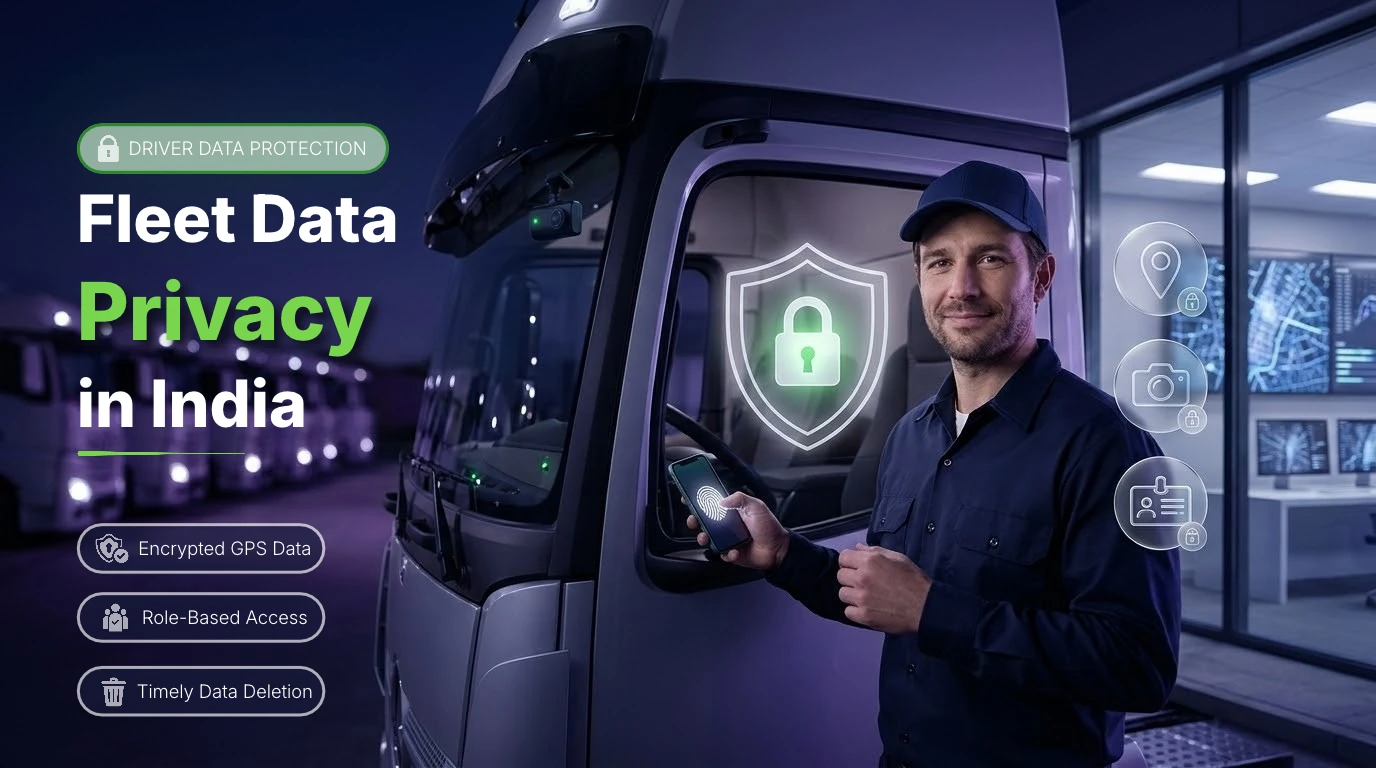
Fleets protect data privacy by collecting only the data they need, telling drivers what is collected and why, securing it with encryption and access controls, deleting it when it is no longer needed, and responding quickly to any breach. Fleet systems hold sensitive personal data, such as drivers' locations, camera footage, and contact details, and in India the Digital Personal Data Protection (DPDP) Act 2023 and its Rules set clear legal duties for handling it.
GPS tracking, AI cameras, and fleet apps make fleets safer and more efficient, but they also create a detailed record of where drivers go and how they behave. If that data is leaked, misused, or kept longer than necessary, it harms drivers and exposes the business to penalties. This guide explains which fleet data counts as personal data, the main risks, what India's DPDP law requires, and practical steps to keep fleet data private and secure.
What this guide covers
- Which fleet data is personal data
- The main data privacy risks for fleets
- What India's DPDP law means for fleets
- How to protect fleet data
- Questions to ask your telematics provider
- FAQs
Which Fleet Data Is Personal Data?
Any information that can identify a person is personal data. In a fleet, that covers much more than names and phone numbers:
- Location history: GPS data linked to a vehicle that a known driver uses shows where that person has been.
- Camera footage: road-facing and driver-facing cameras record faces, voices, and behaviour.
- Driver identity: names, phone numbers, licence details, ID cards, and driver ID tags.
- Driving scores and incidents: records of speeding, harsh braking, fatigue, or phone use.
- Tolls and payments: FASTag accounts, fuel cards, and payment details linked to vehicles and drivers.
- Working hours: shift start and end times, breaks, and overtime.
The Main Data Privacy Risks for Fleets
- Data breaches: poorly secured platforms, accounts, or devices can expose location and personal data to attackers.
- Insider misuse: staff with broad access may view or share driver data for the wrong reasons.
- Over-collection: tracking drivers off duty, or keeping footage and location history for years, creates risk without benefit.
- Weak passwords and shared logins: a single shared account makes it impossible to know who accessed what.
- Insecure devices: trackers and cameras with default passwords or outdated firmware can be compromised.
- Third parties: data shared with insurers, partners, or software vendors must be protected too.
- Payment and toll scams: fake FASTag recharge links, toll messages, and public Wi-Fi at toll plazas and rest stops are used to steal account and card details. Drivers and fleet admins should only use official apps and websites.
What India's DPDP Law Means for Fleets
The Digital Personal Data Protection Act 2023 sets India's rules for handling digital personal data, and the DPDP Rules 2025, notified on 14 November 2025, explain how it works in practice. Most of the main obligations apply 18 months after the Rules were notified, so fleets should prepare now. Key points for fleets include:
- Notice and a lawful basis: organisations must give a clear notice of what personal data is collected and why, and process it with consent or under a "legitimate use" allowed by the Act. Some processing for employment purposes may not need consent, but notice, security, and other duties still apply.
- Purpose limitation: data should only be used for the purpose it was collected for, such as safety, route planning, or payroll.
- Reasonable security safeguards: organisations must protect personal data with measures such as encryption, access controls, and logging.
- Breach reporting: personal data breaches must be reported to the Data Protection Board of India and to the people affected.
- Erasure: data should be deleted when it is no longer needed for its purpose, unless the law requires it to be kept.
- Rights of individuals: people can ask to access, correct, and erase their data, and to raise grievances.
- Penalties: failing to take reasonable security safeguards can lead to penalties of up to ₹250 crore.
This is a summary, not legal advice. Fleets should take legal advice on how the law applies to their own operations.
How to Protect Fleet Data
- Tell drivers clearly. Write a short fleet data policy that explains what is collected, why, who can see it, and how long it is kept, and share it with every driver.
- Collect only what you need. Turn off tracking outside working hours where possible, for example with a privacy mode for permitted personal use, and avoid recording audio unless there is a clear need.
- Limit who can see what. Use individual logins and role-based access, so supervisors see only their own vehicles and drivers, and keep an audit log of who viewed or exported data.
- Secure every layer. Use strong passwords and two-factor authentication for fleet software, encrypt data in transit and at rest, and connect devices through private, secure networks.
- Keep devices updated. Change default passwords on trackers and cameras, and apply firmware updates promptly.
- Set retention periods. Decide how long location history, video, and reports are kept, and delete them automatically after that time.
- Check your vendors. Make sure telematics, camera, and software providers protect data properly, and put data protection terms in your contracts.
- Plan for breaches. Have a simple plan to detect, contain, investigate, and report a breach, and test it.
- Train staff and drivers. Teach them to spot phishing, fake toll and FASTag messages, and suspicious login attempts.
Questions to Ask Your Telematics Provider
- Where is our data stored, and who can access it?
- Is data encrypted in transit and at rest?
- Can we set role-based permissions and see an audit log of user activity?
- Can we set our own retention periods and delete data on request?
- How are devices secured and updated?
- How will you notify us of a security incident, and how quickly?
- How does your platform help us meet DPDP Act obligations?
How Anstel Helps
Anstel's Autonautics platform brings fleet tracking, AI cameras, fuel, maintenance, and delivery data together in one system, so fleets manage their data in one place instead of across many tools. Talk to the Anstel team about how your data is stored, secured, and accessed, and how the platform can support your data protection policies.
Frequently Asked Questions
Is GPS tracking data personal data?
Yes, when it can be linked to an identifiable person. Location data from a vehicle that a known driver uses shows where that person has been, so it is personal data and must be protected.
Does the DPDP Act apply to fleet tracking?
Yes. The DPDP Act 2023 applies to digital personal data processed in India, including driver location, camera footage, contact details, and driving records collected by fleet systems.
Do I need drivers' consent to track company vehicles?
Not always. The DPDP Act allows some processing for employment purposes as a legitimate use, but you must still give clear notice, use data only for its stated purpose, keep it secure, and respect drivers' rights. Take legal advice for your situation.
When do the DPDP Rules come into force?
The DPDP Rules 2025 were notified on 14 November 2025. Some provisions applied immediately, while most of the main obligations for organisations apply 18 months after notification.
What is the penalty for a data breach under the DPDP Act?
Failing to take reasonable security safeguards to prevent a personal data breach can lead to penalties of up to ₹250 crore, imposed by the Data Protection Board of India.
How long should fleets keep tracking and video data?
Only as long as needed for the stated purpose, such as investigating incidents, payroll, or legal requirements. Set clear retention periods for each type of data and delete it automatically after that time.
Privacy Builds Trust
Fleet data is valuable because it is detailed, and that is exactly why it must be protected. Clear policies, limited access, strong security, and timely deletion keep drivers' trust, reduce legal risk, and make fleet technology easier to roll out.
Get in touch with the Anstel team to discuss secure, privacy-conscious fleet management for your business.