




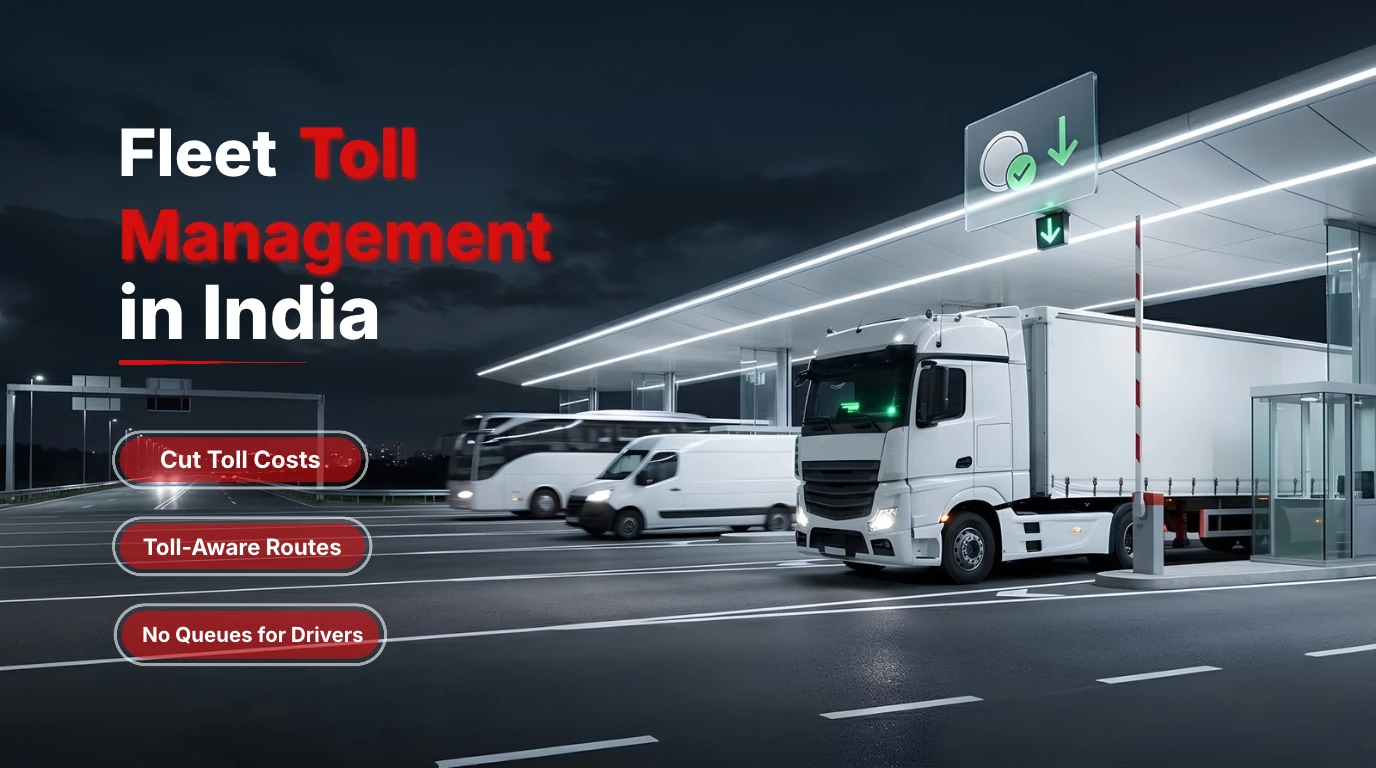
Fleet toll management means planning, paying, tracking, and checking every toll your vehicles pay, so you don't overpay and drivers don't lose time at toll plazas. In India, that means keeping a valid FASTag on every vehicle, planning toll-aware routes, matching toll deductions against GPS trip data, and getting ready for barrier-free and satellite-based tolling. Done well, it cuts toll and fuel costs and makes long trips easier for drivers.
Tolls are one of the largest running costs for trucks, buses, and delivery fleets on national highways, and toll collection in India is changing fast. Cash is being phased out, barrier-free toll points are going live, and GNSS-based tolling is on the way. This guide explains how toll collection works today, where fleets lose money on tolls, eight ways to cut toll costs, how better toll management improves the driver experience, and how to prepare for what comes next.
What this guide covers
- How toll collection works in India today
- What is changing: barrier-free and GNSS tolling
- Where fleets lose money on tolls
- 8 ways to cut fleet toll costs
- How toll management improves the driver experience
- How to prepare your fleet
- FAQs
How Toll Collection Works in India Today
Almost all toll on national highways is now paid by FASTag, an RFID sticker on the windscreen that is linked to a bank account or wallet. When a vehicle reaches the toll lane, a reader scans the tag and the toll is deducted automatically, so the vehicle doesn't need to stop for cash. According to the Ministry of Road Transport and Highways, FASTag accounts for more than 98% of toll collection on national highways.
FASTag has been mandatory for four-wheelers since February 2021. Vehicles without a valid, working FASTag pay more:
- Cash: twice the normal toll.
- UPI: 1.25 times the normal toll, under a rule that took effect on 15 November 2025.
NHAI has also announced plans to stop cash payments at national highway toll plazas, so FASTag and UPI are becoming the main ways to pay. For a fleet, every trip without a working tag is money lost.
What Is Changing: Barrier-Free and GNSS Tolling
Barrier-Free Toll Points (MLFF)
Multi-Lane Free Flow (MLFF) tolling removes the barriers altogether. Overhead gantries read the FASTag and the number plate as vehicles pass at normal speed, so nobody stops. NHAI launched India's first MLFF toll point at Choryasi in Gujarat on 1 May 2026, and by August 2026 six MLFF plazas had processed more than 1.1 crore vehicle transactions. NHAI has invited bids for 104 more.
Without a barrier, a failed payment doesn't stop the vehicle. Instead, the owner receives an e-notice and has 72 hours to pay before the toll doubles. For fleets, that makes tag health and number plate details more important than ever.
GNSS-Based Tolling
In September 2024, the government amended the National Highways fee rules to allow toll collection using satellite positioning (GNSS). A vehicle with an on-board unit is charged for the distance it actually travels on the tolled highway, and there is a toll-free stretch of up to 20 km for vehicles using the system. GNSS tolling will start alongside FASTag, not replace it overnight, but it points to a future where toll is calculated from the vehicle's position data.
Where Fleets Lose Money on Tolls
- Unplanned routes: drivers taking toll roads that aren't needed, or longer toll routes than planned.
- Penalty payments: paying double in cash or 1.25 times by UPI when a tag is missing, low on balance, damaged, or blacklisted.
- Wrong or duplicate charges: a vehicle charged twice, charged at the wrong vehicle class, or charged for a plaza it never crossed.
- Queues and idling: fuel burned and hours lost waiting at busy plazas.
- Unpaid e-notices: missed payments at barrier-free toll points that double after 72 hours.
- Unauthorised trips: vehicles used for personal or off-route journeys, with the toll paid by the business.
- Manual reconciliation: toll statements checked by hand, if at all, so errors are never recovered.
8 Ways to Cut Fleet Toll Costs
1. Plan Toll-Aware Routes
Compare routes by total cost, not just distance. Sometimes a toll road saves enough fuel and time to be worth it; sometimes a free road is just as quick. Route planning software that includes toll costs helps you choose, and geofences alert you when a vehicle leaves the planned route.
2. Keep Every FASTag Valid and Topped Up
Under NHAI's "one vehicle, one FASTag" rule, each vehicle can have only one active tag. Make sure every vehicle has a working tag in the correct vehicle class, linked to the right registration. Use automatic top-ups or a central fleet account so tags never run low before a trip, and replace damaged tags quickly.
3. Use Discounts and Passes
National highway toll plazas usually offer cheaper rates for return journeys made within 24 hours, and monthly passes for vehicles that use the same plaza often. Check the rates on your regular routes and use them where they fit your schedules.
4. Match Every Toll Deduction to a Trip
Compare FASTag statements against GPS trip history. If a vehicle was charged at a plaza it never passed, charged twice, or charged at the wrong vehicle class, you have evidence to raise a dispute with the tag issuer and recover the money.
5. Avoid Peak Queues
In India, toll rates don't change with the time of day, but queues do. Scheduling trips to pass busy plazas outside peak hours cuts waiting time and the fuel wasted idling.
6. Centralise Toll Spending
Bring all toll payments into one system and report them by vehicle, driver, route, and customer. This shows which routes and customers cost the most in tolls, so you can price contracts correctly and spot unusual spending.
7. Audit Toll Costs Every Month
A short monthly review catches problems early: tags that keep failing, vehicles paying penalties, routes with rising toll costs, and charges that don't match trips.
8. Train Drivers
Drivers should know the approved routes, what to do if a tag fails, how to avoid fake FASTag recharge links and toll scams, and why sticking to the plan matters. A short briefing saves money on every trip.
How Toll Management Improves the Driver Experience
Good toll management doesn't only save money; it also makes the job easier for drivers.
- Less waiting: working FASTags and, increasingly, barrier-free toll points mean fewer and shorter stops.
- No cash or arguments: drivers don't need to carry cash or argue about balances and vehicle classes at the booth.
- Less stress and fatigue: fewer delays help drivers stick to schedules and take proper rest, which supports safer driving.
- Clear routes: drivers know which roads to take and which plazas to expect.
- Fewer emissions: less stopping, idling, and accelerating at plazas cuts fuel use and emissions.
How to Prepare Your Fleet for Barrier-Free and GNSS Tolling
- Check every FASTag: one active tag per vehicle, in the right class, linked to the correct registration.
- Keep vehicle records accurate: make sure registration details and number plates are correct and clean, so cameras can read them.
- Watch for e-notices: assign someone to check and pay any e-notices within 72 hours.
- Plan for on-board units: as GNSS tolling expands, vehicles will need approved on-board units, so factor them into your hardware plans.
- Protect the data: toll records, FASTag accounts, and location history are sensitive data, so limit who can access them.
How Anstel Helps
Anstel's Autonautics fleet management platform gives you the GPS trip history, route planning, geofences, and reports you need to manage tolls. You can see exactly which routes each vehicle took, check toll deductions against real trips, spot vehicles that leave approved routes, and report costs by vehicle, driver, and route, alongside fuel, idling, and driver behaviour data, all in one dashboard.
Frequently Asked Questions
What is fleet toll management?
Fleet toll management is the process of planning, paying, tracking, and checking the tolls a fleet pays. It includes keeping FASTags valid, planning toll-aware routes, matching toll deductions to trips, and reporting toll costs by vehicle, driver, and route.
Is FASTag mandatory for commercial vehicles in India?
Yes. FASTag has been mandatory for four-wheelers, including trucks, buses, and vans, since February 2021. Vehicles without a valid, working FASTag pay twice the toll in cash, or 1.25 times the toll by UPI.
What happens if a FASTag doesn't work at a toll plaza?
If the tag can't be read or doesn't have enough balance, the vehicle pays as a non-FASTag user: twice the normal toll in cash, or 1.25 times by UPI. At barrier-free toll points, the owner receives an e-notice and has 72 hours to pay before the amount doubles.
What is barrier-free MLFF tolling?
Multi-Lane Free Flow tolling uses overhead gantries with FASTag readers and number plate cameras, so vehicles pay without stopping or slowing down. India's first MLFF toll point opened at Choryasi in Gujarat in May 2026, and NHAI is expanding it to more plazas.
Will GNSS tolling replace FASTag?
Not straight away. GNSS tolling charges vehicles for the distance they travel, using an on-board unit and satellite positioning. It will run alongside FASTag at first, with dedicated lanes for equipped vehicles.
Can commercial vehicles use the FASTag Annual Pass?
No. The FASTag Annual Pass launched in August 2025 is for private, non-commercial cars, jeeps, and vans. Commercial fleets pay normal toll rates, but can use return journey discounts and monthly passes where they apply.
Every Toll Counts
Tolls will always be part of running a fleet, but overpaying for them doesn't have to be. Working FASTags, toll-aware routes, and regular checks against GPS trip data cut costs today, and the same habits will prepare your fleet for barrier-free and satellite-based tolling.
Get in touch with the Anstel team to see how GPS trip data and fleet reports can help you control toll costs.