






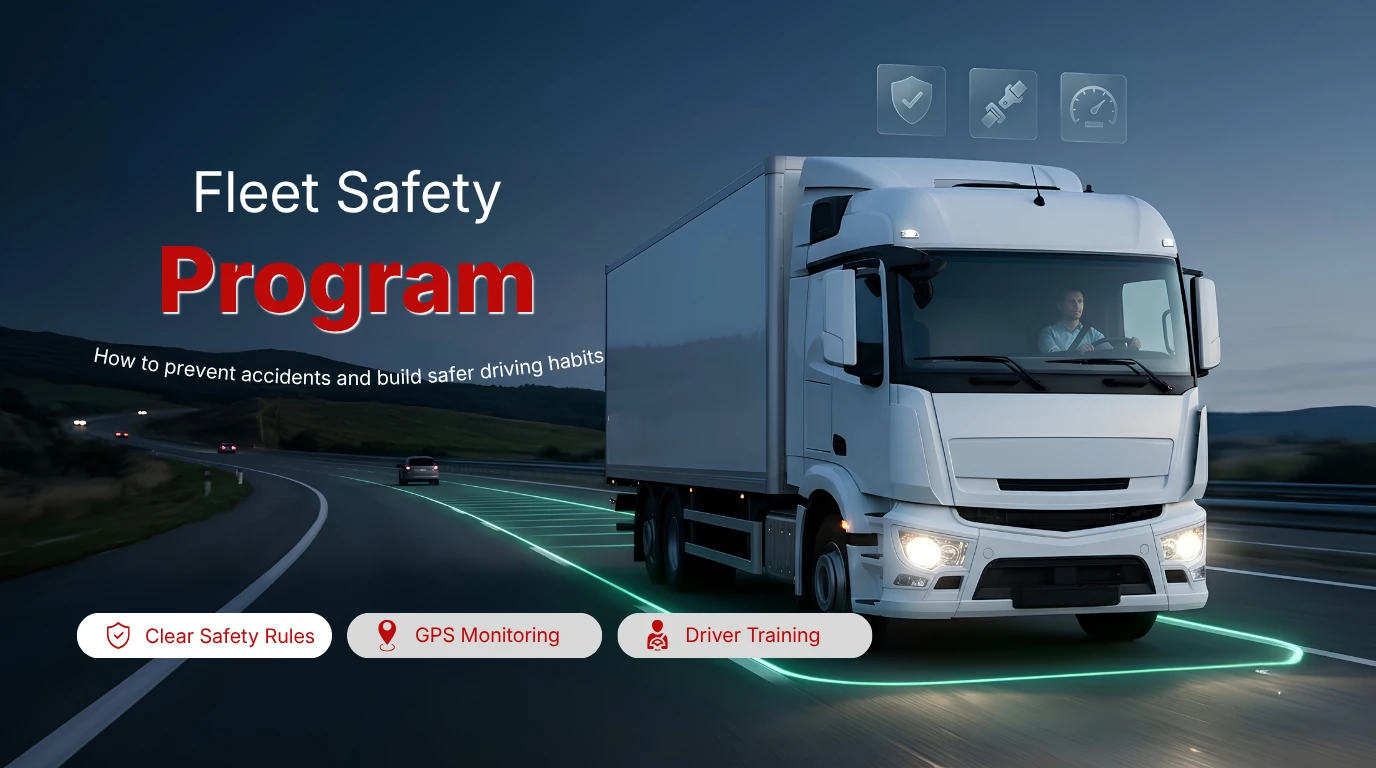
A fleet safety program is a written set of rules, training, checks, and monitoring that keeps drivers, vehicles, and other road users safe. The most effective programs combine a clear safety policy, careful hiring and training, well-maintained vehicles, and GPS tracking and telematics data that show how vehicles are actually driven, so managers can coach drivers and fix risks before they cause accidents.
Road crashes are one of the biggest risks any fleet faces. According to India's Ministry of Road Transport and Highways (MoRTH), about 1.77 lakh people died on Indian roads in 2024, around 485 every day, and over-speeding was the single biggest cause. Worldwide, the World Health Organization estimates that about 1.19 million people die in road crashes each year. This guide explains the most common causes of fleet accidents, what a fleet safety program includes, how GPS tracking improves road safety, the safe driving rules every fleet should set, and how to build a program step by step.
What this guide covers
- Why fleet safety matters
- Common causes of fleet accidents
- What a fleet safety program includes
- How GPS tracking and telematics improve road safety
- 10 safe driving rules for fleet drivers
- How to build a fleet safety program
- FAQs
Why Fleet Safety Matters
Every crash has a human cost first, and fleets also carry business costs: vehicle repairs, downtime, insurance claims, legal liability, late deliveries, and damage to the company's reputation. Commercial drivers spend far more time on the road than most people, often under time pressure, so they face more risk. In India, national highways carry about 31% of road accidents but account for about 37% of deaths, according to MoRTH's 2024 report, which is where many fleet vehicles spend their day.
The good news is that most fleet accidents are preventable. They come from a small number of behaviours and conditions that a fleet can see, measure, and change.
Common Causes of Fleet Accidents
- Speeding: the biggest single cause of road deaths in India. Higher speed means longer stopping distances and more severe crashes.
- Distracted driving: using a phone, adjusting navigation, eating, or looking away from the road, even for a few seconds.
- Fatigue: long shifts, night driving, and too little sleep slow reactions and cause microsleeps. Our separate "What Is Driver Fatigue?" guide in the Anstel Knowledge Center covers this in detail.
- Tailgating: following too closely leaves no time to react when the vehicle ahead brakes.
- Aggressive and reckless driving: harsh braking, rapid acceleration, sudden lane changes, and jumping signals. Our "What Is Reckless (Rash) Driving?" guide explains the law and penalties in India.
- Driving under the influence: alcohol and drugs impair judgement and reflexes.
- Poorly maintained vehicles: worn tyres, weak brakes, and faulty lights cause breakdowns and crashes.
- Weather and road conditions: rain, fog, and poor roads increase risk, especially when schedules don't allow for them.
What a Fleet Safety Program Includes
- A written safety policy: who may drive, vehicle use rules, driving and rest hours, phone and seat belt rules, how to report incidents and defects, and what happens when rules are broken.
- Careful hiring: check every driver's licence, driving history, and experience with the vehicle type before they start.
- Training: defensive driving, hazard awareness, speed and following distance, fatigue, emergency procedures, and the company's own rules, with regular refreshers.
- Vehicle maintenance: daily pre-trip checks by drivers and a preventive maintenance schedule for tyres, brakes, lights, and steering.
- Monitoring and coaching: GPS tracking, driver scores, and cameras show how vehicles are driven, so coaching is based on facts.
- Incident management: clear steps for what drivers do after a breakdown or crash, and a review of every incident and near miss to prevent the next one.
How GPS Tracking and Telematics Improve Road Safety
A safety policy only works if managers can see whether it is being followed. GPS tracking and telematics make driving behaviour visible across the whole fleet:
- Speed alerts: get notified when a vehicle goes over the limit you set for highways, cities, or specific zones such as school areas.
- Harsh driving events: harsh braking, rapid acceleration, and sharp cornering are recorded for each driver and trip.
- Driver scores: events are combined into fair, consistent scores that show who needs coaching and who deserves recognition.
- Trip replay: review any journey to see the route, speed, and stops, and to understand what happened before an incident.
- Geofences and hours: alerts when vehicles enter restricted areas or are driven outside working hours, which also helps manage fatigue.
- Faster emergency response: if a driver has an accident or breakdown, managers know exactly where the vehicle is and can send help.
- Maintenance alerts: reminders based on kilometres and engine data keep tyres, brakes, and engines in safe condition.
- Cameras and driver monitoring: road-facing cameras and in-cab driver monitoring add video evidence and warn drivers about fatigue and distraction in real time.
The data is most useful when drivers see it too. Sharing each driver's own scores and trips turns monitoring into coaching rather than surveillance.
10 Safe Driving Rules for Fleet Drivers
- Always wear a seat belt, and make sure passengers do too.
- Keep to speed limits, and slow down further in rain, fog, and poor visibility.
- Never use a handheld phone while driving; set navigation before moving off.
- Keep a safe following distance, at least three seconds in good conditions and more in bad weather.
- Never drive after drinking alcohol or taking substances or medicines that cause drowsiness.
- Take regular rest breaks, and stop safely if you feel tired.
- Complete a quick pre-trip check of tyres, lights, brakes, and mirrors.
- Follow the planned route, and report delays rather than speeding to catch up.
- Secure loads properly and never exceed the vehicle's weight limit.
- Report every incident, near miss, and vehicle defect straight away.
How to Build a Fleet Safety Program
- Assess your risks. Review past incidents, claims, speeding data, and routes to find your biggest risks.
- Write the policy. Set clear rules and responsibilities, and have every driver read and sign it.
- Train and onboard. Train all drivers on the policy and safe driving, and add refreshers for anyone whose data shows problems.
- Monitor with technology. Use GPS tracking, driver scores, and, where needed, cameras to measure behaviour across the fleet.
- Coach and reward. Hold short one-to-one coaching sessions based on each driver's data, and recognise your safest drivers.
- Review and improve. Track safety KPIs every month and update the program as risks change.
Safety KPIs to Track
- Speeding events per 100 km
- Harsh braking and acceleration events per 100 km
- Average driver safety score
- Preventable incidents and near misses
- Maintenance completed on time
- Training completion rate
How Anstel Helps
Anstel's Autonautics platform gives fleets the data behind a strong safety program: live tracking, speed and harsh driving alerts, driver scores, trip replay, geofences, maintenance reminders, and AI camera and driver monitoring events, all in one dashboard. Reports make it easy to coach drivers, recognise safe drivers, and show improvement over time.
Frequently Asked Questions
What is a fleet safety program?
A fleet safety program is a set of policies, training, vehicle checks, and monitoring that a business uses to keep its drivers, vehicles, and other road users safe. It usually includes a written safety policy, driver training, preventive maintenance, and driver behaviour monitoring.
How does GPS tracking improve road safety?
GPS tracking shows speed, harsh braking, rapid acceleration, routes, and driving hours for every vehicle. Managers use alerts and driver scores to coach risky drivers, reward safe ones, respond quickly to emergencies, and keep vehicles maintained.
What are the main causes of fleet accidents?
The main causes are speeding, distracted driving, fatigue, tailgating, aggressive driving, driving under the influence, poorly maintained vehicles, and bad weather or road conditions.
What should a fleet safety policy include?
It should cover who may drive, vehicle use rules, speed and phone rules, seat belts, alcohol and drugs, driving and rest hours, vehicle checks, how to report incidents and defects, and the consequences of breaking the rules.
How can fleet managers encourage safe driving?
Set clear rules, train drivers regularly, share each driver's own safety data, coach rather than only punish, reward safe drivers, and keep vehicles well maintained.
Is driver tracking legal in India?
Tracking company vehicles is generally allowed, but location and driving data are personal data under the Digital Personal Data Protection Act 2023. Tell drivers what is collected and why, limit access, and keep the data secure.
Make Safety Part of Every Trip
A fleet safety program works when rules, training, maintenance, and data come together, and when drivers see safety as something the business does with them, not to them. Start with your biggest risks, measure them, and improve a little every month.
Get in touch with the Anstel team to see how fleet data can support your safety program.