


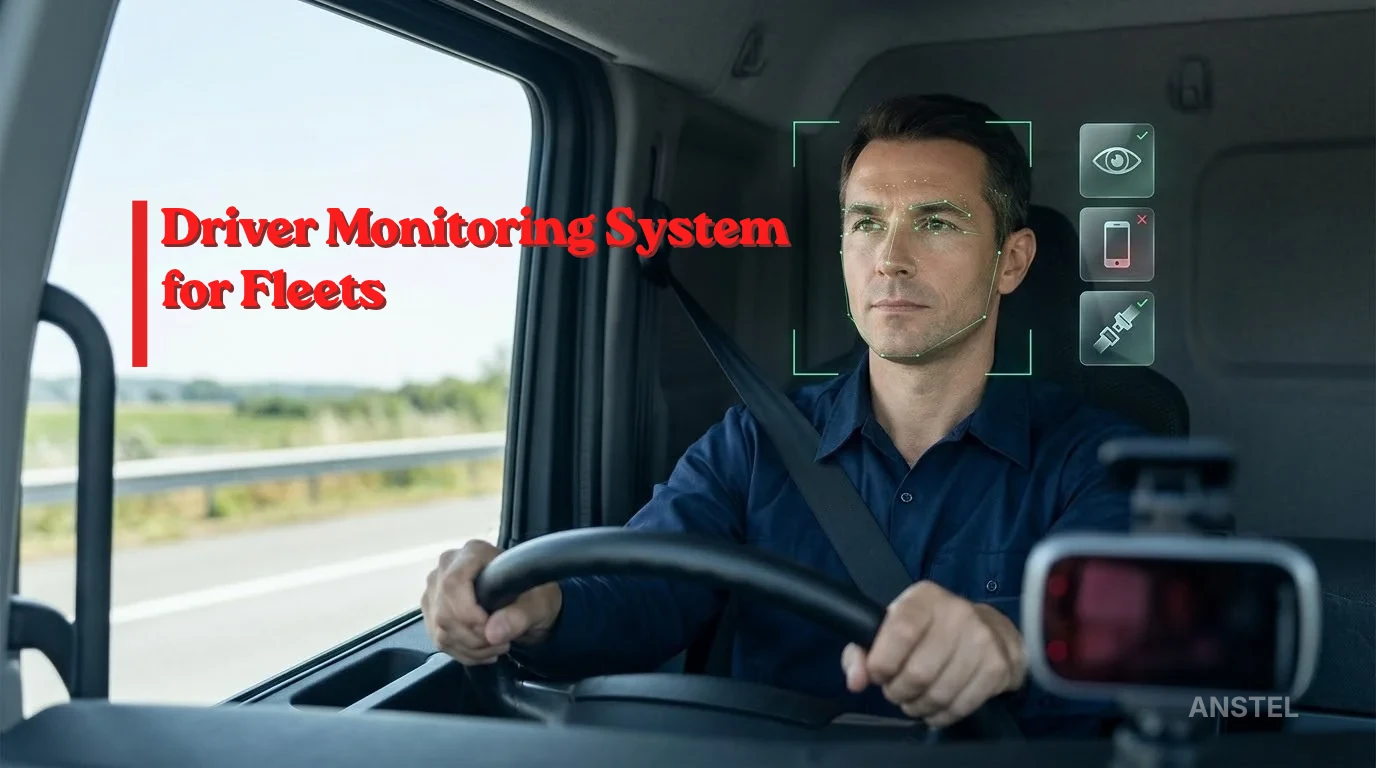
A driver monitoring system (DMS) is an in-cab camera with AI software that watches the driver for signs of fatigue, distraction, and unsafe behaviour, such as long eye closures, looking away from the road, or using a phone. When it detects a risk, it warns the driver straight away and sends the event to the fleet manager, so fleets can prevent crashes and coach drivers using real evidence.
Most crashes involve human error, and two of the biggest causes, drowsiness and distraction, are hard to see from GPS data alone. A driver monitoring system fills that gap by looking at the driver rather than the road. It is now mainstream: in the European Union, drowsiness warning systems have been required on all new vehicles since July 2024, and advanced distraction warning systems become mandatory for all new vehicles from July 2026. This guide explains how a DMS works, what it detects, how it differs from dashcams and ADAS, the benefits for fleets, privacy considerations, and how to choose one.
What this guide covers
- What a driver monitoring system is
- How it works
- What it detects
- DMS vs dashcams and ADAS
- Benefits for fleets
- Regulations and privacy
- How to choose and roll out a DMS
- FAQs
What Is a Driver Monitoring System?
A driver monitoring system is a small camera mounted on the dashboard or windscreen, facing the driver. Using infrared light, it can see the driver's face clearly by day or night, and through most sunglasses. Computer vision software, usually running on the device itself, analyses the driver's eyes, head position, and actions many times a second to judge whether they are alert and focused on the road.
In commercial fleets, the DMS connects to the vehicle's telematics device, so every safety event is recorded with the time, location, speed, and a short video clip, and appears in the fleet management platform.
How a Driver Monitoring System Works
- Capture: the infrared camera continuously tracks the driver's face, eyes, and head.
- Analyse: AI models measure cues such as eye closure, blink rate, gaze direction, and head pose, and recognise actions such as holding a phone.
- Alert: the driver gets an immediate audio or visual warning, and serious events are sent to the fleet manager.
- Review: events and video clips feed driver scores and reports used for coaching.
What a Driver Monitoring System Detects
- Drowsiness and fatigue: long eye closures, slow blinking, yawning, and head nodding.
- Distraction: looking away from the road for too long, for example at a phone, passenger, or screen.
- Phone use: holding a phone to the ear or texting while driving.
- Smoking and eating: where the fleet's policy bans them while driving.
- Seat belt use: whether the driver is wearing a seat belt.
- Driver identity: some systems recognise the driver's face, so trips and events are linked to the right person.
- Camera tampering: alerts if the camera is covered, moved, or disconnected.
Exactly which events a system detects, and how accurately, varies by product, so test the features that matter most to you.
DMS vs Dashcams and ADAS
These technologies are often confused, but each watches something different:
- Road-facing dashcam: records the road ahead, giving evidence of what happened outside the vehicle.
- ADAS (advanced driver assistance systems): watch the road and other vehicles, with features such as forward collision and lane departure warnings.
- Driver monitoring system: watches the driver, detecting fatigue and distraction inside the cab.
Used together, they cover both the risks on the road and the risks behind the wheel. Many fleets choose a dual-facing AI camera that combines a road-facing camera, ADAS warnings, and driver monitoring in one device.
Benefits of a Driver Monitoring System for Fleets
- Fewer crashes: real-time warnings wake up drowsy drivers and refocus distracted ones before a crash happens.
- Fair, targeted coaching: video clips show exactly what happened, so coaching is specific and drivers can see it for themselves.
- Better fatigue management: patterns of drowsiness show which shifts, routes, or schedules need to change.
- Lower costs: fewer incidents mean lower repair, downtime, and insurance costs.
- Evidence after an incident: footage helps show whether the driver was alert and attentive, which can protect drivers from false claims.
- Stronger safety culture: drivers improve when they get instant feedback, and safe drivers can be recognised.
Regulations and Privacy
In the European Union, the General Safety Regulation requires a driver drowsiness and attention warning on all new cars, vans, trucks, and buses from July 2024, and an advanced driver distraction warning on all new vehicles from July 2026. Safety rating programmes such as Euro NCAP also reward effective driver monitoring. Other markets are considering similar requirements, so more new vehicles will include driver monitoring from the factory.
Driver-facing cameras collect sensitive personal data, so fleets must handle it carefully. In India, video and location data are personal data under the Digital Personal Data Protection Act 2023. Tell drivers what is recorded and why, explain who can view footage and for how long it is kept, limit access, and use the data for safety and coaching. Many systems only upload short clips around events rather than continuous video, which reduces privacy concerns.
How to Choose and Roll Out a Driver Monitoring System
- Check detection quality: reliable fatigue, distraction, and phone detection, including at night and with sunglasses.
- Look for in-cab warnings and remote alerts: drivers need instant feedback, and managers need the important events.
- Make sure it integrates: events should appear in your fleet management platform alongside location, speed, and trips.
- Review reporting: clear video clips, driver scores, and trend reports make coaching easy.
- Check privacy controls: event-based recording, access permissions, and data retention settings.
- Pilot first: test on a few vehicles, tune alert sensitivity, and involve drivers early so they see it as a safety tool.
How Anstel Helps
Anstel works with Cipia to offer AI driver monitoring for fleets. The system detects drowsiness, distraction, phone use, smoking, and seat belt use, warns the driver in real time, and sends events to Anstel's Autonautics platform, where they appear alongside each vehicle's location, speed, and trip history and feed into driver scores and coaching reports.
Frequently Asked Questions
What is a driver monitoring system?
A driver monitoring system is an in-cab camera with AI software that detects driver fatigue, distraction, and unsafe behaviour in real time, warns the driver, and sends safety events to the fleet manager.
How does a driver monitoring system detect fatigue?
It uses an infrared camera to track the driver's eyes and head. Long eye closures, slow blinking, yawning, and head nodding are signs of drowsiness that trigger a warning.
Does a driver monitoring system work at night?
Yes. Most systems use infrared cameras that see the driver's face clearly in the dark and through most sunglasses.
What is the difference between DMS and ADAS?
A driver monitoring system watches the driver for fatigue and distraction. ADAS watches the road, with features such as collision and lane departure warnings. Together they cover both driver and road risks.
Can a driver monitoring system detect phone use?
Many can detect a driver holding a phone or looking down at one. Accuracy depends on the product and camera position, so check it during a pilot.
Is a driver-facing camera legal in fleet vehicles?
Generally yes for company vehicles, but the footage is personal data. Fleets should tell drivers what is recorded and why, limit access, set retention periods, and follow privacy laws such as India's DPDP Act.
Keep an Eye on What Matters Most
GPS tracking shows how a vehicle is driven; a driver monitoring system shows whether the driver is fit to drive it. Together, they help fleets prevent the crashes that fatigue and distraction cause.
Get in touch with the Anstel team to plan a driver monitoring pilot for your fleet.