








Driver fatigue is a state of physical or mental tiredness that reduces a driver's alertness, reaction time, and judgement. It is caused mainly by too little sleep, long driving hours, night and shift work, and too few breaks. Warning signs include frequent yawning, heavy eyelids, drifting out of the lane, and microsleeps. The only real cure is sleep, but fleets can prevent fatigue with sensible schedules, rest breaks, training, and driver monitoring technology.
Fatigue is far more common in crashes than official figures suggest, because police can't easily see that a driver was tired. In the United States, the AAA Foundation for Traffic Safety estimates that 17.6% of fatal crashes between 2017 and 2021 involved a drowsy driver, around ten times the number recorded in police reports. Research also shows that being awake for 17 hours affects driving about as much as a blood alcohol level of 0.05. This guide explains what causes driver fatigue, the warning signs, who is most at risk, how fleets can prevent it, and how technology helps.
What this guide covers
- What driver fatigue is
- Causes of driver fatigue
- Warning signs
- When and who is most at risk
- How fatigue affects driving
- How drivers and fleet managers can prevent fatigue
- How technology detects fatigue
- FAQs
What Is Driver Fatigue?
Driver fatigue, also called drowsy driving, is tiredness that makes it harder to drive safely. A fatigued driver notices hazards later, reacts more slowly, makes poorer decisions, and may fall asleep for a few seconds without realising it. These "microsleeps" are especially dangerous: at 80 km/h, a vehicle travels more than 20 metres every second with nobody in control.
What Causes Driver Fatigue?
- Not enough sleep: too little or poor-quality sleep, even for one night, reduces alertness the next day.
- Long driving hours: the longer the shift, the more tired the driver.
- Night and shift work: driving when the body expects to sleep, and rotating shifts, disrupt the body clock.
- Too few breaks: long stretches without rest, often under delivery pressure.
- Sleep disorders: conditions such as sleep apnoea cause poor sleep and daytime sleepiness, and often go undiagnosed.
- Medicines and alcohol: some medicines cause drowsiness, and even small amounts of alcohol make fatigue worse.
- Monotonous roads: long, straight highways with little to keep the driver engaged.
Warning Signs of Driver Fatigue
- Frequent yawning, heavy eyelids, and rubbing the eyes
- Difficulty keeping the head up, or head nodding
- Drifting out of the lane or onto the shoulder
- Changing speed without meaning to
- Missing exits, signs, or turns
- Not remembering the last few kilometres
- Slower reactions, restlessness, or irritability
Opening a window, turning up the music, or drinking coffee won't fix fatigue. A driver who notices these signs should stop somewhere safe and rest.
When and Who Is Most at Risk
Fatigue can happen at any time, but the risk is highest in the early hours of the morning, roughly between 2 am and 6 am, and in the mid-afternoon, roughly between 2 pm and 4 pm, when the body clock naturally makes people sleepy. Higher-risk groups include:
- Long-haul truck and bus drivers
- Night-shift and rotating-shift workers
- Drivers working very long hours or more than one job
- Young drivers, who are more likely to drive tired at night
- People with untreated sleep disorders
How Fatigue Affects Driving
Fatigue reduces attention, slows reaction time, and weakens judgement, so drivers misjudge speed and distance and respond late to hazards. Crashes caused by fatigue are often severe, because a driver who is asleep doesn't brake or steer away. For fleets, fatigue-related crashes mean injuries, vehicle damage, downtime, delays, insurance claims, and legal risk.
How to Prevent Driver Fatigue
For Drivers
- Get enough good-quality sleep before driving, ideally seven to eight hours.
- Take a break of at least 15 minutes every two hours on long trips.
- Stop and rest as soon as you notice warning signs; a short nap of about 20 minutes can help.
- Avoid heavy meals and alcohol before and during trips.
- Check whether any medicines you take cause drowsiness.
- Share long drives with a second driver where possible.
For Fleet Managers
- Plan realistic schedules: allow time for breaks, traffic, and loading so drivers aren't tempted to push on.
- Follow working-hour rules: in India, the Motor Transport Workers Act limits adult motor transport workers to eight hours a day and 48 hours a week, and Australia's Heavy Vehicle National Law sets work and rest limits for heavy vehicle drivers.
- Limit night driving and avoid scheduling the riskiest hours where possible.
- Train drivers to recognise fatigue and make it safe for them to stop and report it without penalty.
- Encourage health checks and screening for sleep disorders.
- Use a backup driver on long routes.
- Monitor hours and behaviour with fleet tracking and driver monitoring systems.
How Technology Detects Driver Fatigue
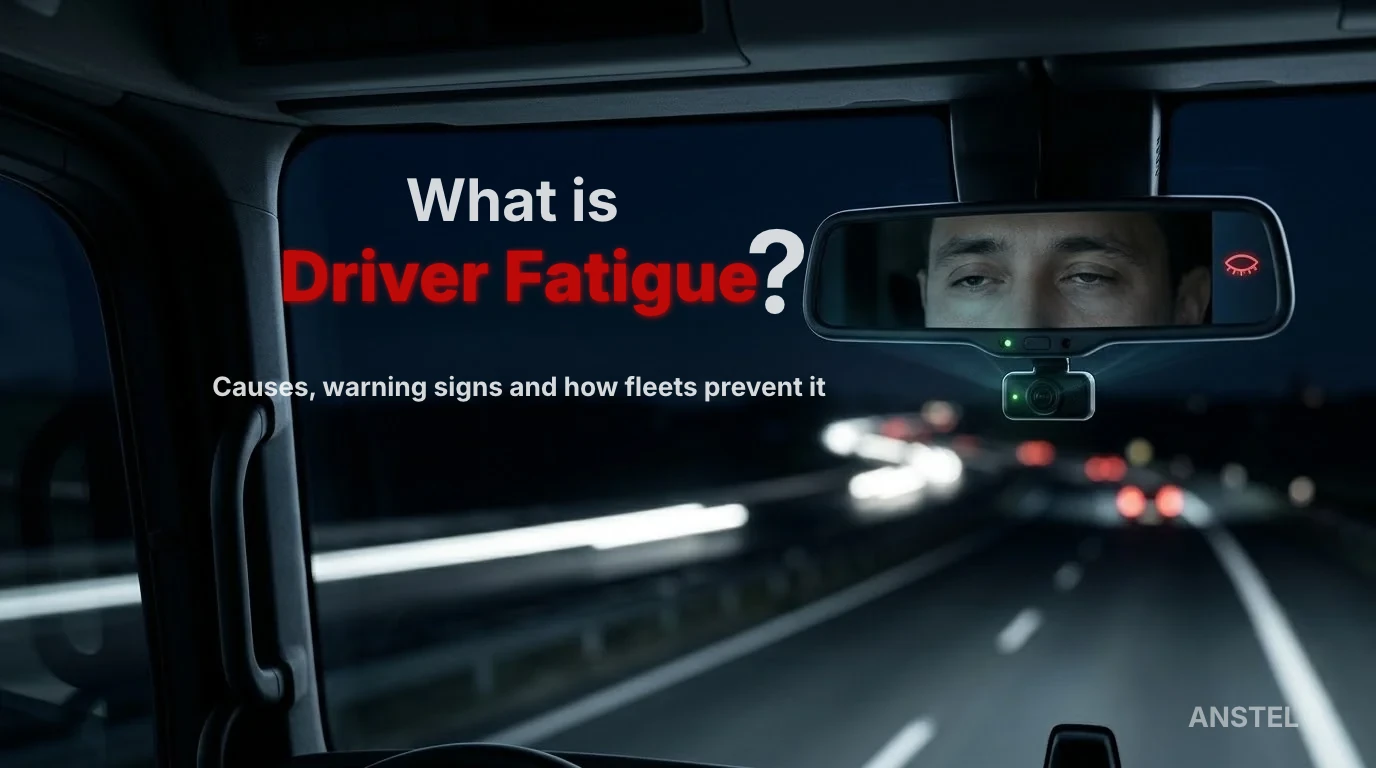
A driver monitoring system uses an infrared camera facing the driver and AI to watch for signs of drowsiness, such as long eye closures, a high blink rate, yawning, and head nodding. When it spots them, it warns the driver with a sound or vibration and can alert the fleet manager. Our "Driver Monitoring System for Fleets" guide in the Anstel Knowledge Center explains how these systems work.
Fleet tracking adds more clues: lane drifting, inconsistent speed, harsh braking, and long hours behind the wheel. Driving hours reports show when drivers are close to their limits, so managers can plan rest before fatigue sets in.
Regulators are moving the same way. In the European Union, driver drowsiness and attention warning systems have been required on all new cars, vans, trucks, and buses since July 2024. Technology helps, but it never replaces proper rest: alerts should prompt a driver to stop, not to keep going.
Building a Fatigue Management Plan
- Assess: review shift patterns, routes, night driving, and past incidents.
- Set rules: maximum driving hours, required breaks, and when drivers must stop.
- Train: teach drivers and supervisors the signs of fatigue and how to respond.
- Monitor: use hours reports, driving data, and driver monitoring alerts.
- Support health: encourage health checks and screening for sleep disorders.
- Review: investigate fatigue-related events and near misses, and adjust schedules.
How Anstel Helps
Anstel works with Cipia to offer AI driver monitoring that detects drowsiness and distraction in the cab and warns drivers in real time. The Autonautics platform combines these alerts with driving hours, trip history, and driving behaviour, so fleet managers can spot fatigue risk early and plan safer schedules.
Frequently Asked Questions
What is driver fatigue?
Driver fatigue is physical or mental tiredness that reduces a driver's alertness, reaction time, and judgement, making it harder to drive safely.
What are the main causes of driver fatigue?
The main causes are too little or poor-quality sleep, long driving hours, night and shift work, too few breaks, untreated sleep disorders, and medicines that cause drowsiness.
What are the signs of driver fatigue?
Common signs include frequent yawning, heavy eyelids, head nodding, drifting out of the lane, changing speed without meaning to, missing signs or turns, and not remembering the last few kilometres.
How often should drivers take a break?
A common rule is to take a break of at least 15 minutes every two hours on long trips, and to stop straight away when signs of fatigue appear. Fleets must also follow local working-hour rules.
Can technology detect driver fatigue?
Yes. Driver monitoring systems use cameras and AI to detect drowsiness, such as long eye closures and head nodding, and warn the driver. They help reduce risk but don't replace proper rest.
Is driver fatigue as dangerous as drink driving?
It can be. Research shows that being awake for 17 hours affects driving about as much as a blood alcohol level of 0.05, and longer without sleep is worse.
Rest Is the Best Safety Feature
Driver fatigue is preventable. Realistic schedules, regular breaks, trained drivers, and monitoring technology together keep tired drivers off the road and everyone safer.
Get in touch with the Anstel team to see how driver monitoring can help your fleet manage fatigue.